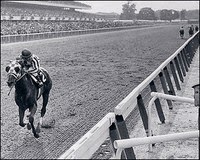
Mr. Bunny was a bad, bad bunny. . .
| The Colbert Report | Mon - Thurs 11:30pm / 10:30c | |||
| The Word - Captain Kangaroo Court | ||||
| ||||
Mr. Bunny was a bad, bad bunny. . .
| The Colbert Report | Mon - Thurs 11:30pm / 10:30c | |||
| The Word - Captain Kangaroo Court | ||||
| ||||
 Transsiberian (2008) - Roy and Jessie (Woody Harrelson and Emily Mortimer) are Americans who've gone to China with Roy's church to work with underprivileged children. A train buff, Roy books them passage on the Transsiberian Express from Beijing to Moscow, before flying back to the States. On the journey, they meet Carlos (Eduardo Noriega), a sexy, well-travelled Spaniard who seems to knows a lot about Customs, and Abby (Kate Mara), a young woman who has run away from Seattle.
Meanwhile, Grinko, a Russian narcotics detective (Ben Kinglsey) is tracking down whoever killed a drug dealer in Vladivostok and vanished with both the drugs and the money.
Jessie, who had a fairly wild past before marrying Roy and trying to settle down, feels sympathetic towards the seemingly lost Abby. And she feels something more unsettling for Carlos, who gives off an aura of raw sexuality and physical danger. When the train stops at a snowy village somewhere in Siberia, Roy goes looking at old coal locomotives with Carlos. When the train starts up again, Roy is no longer aboard.
Hoping that Roy has simply missed the train, Jessie gets off at the next village to make inquiries. Carlos and Abby decide they will stay with her until she finds her husband. They're concerned about her safety. In this isolated, wintry and foreign environment, the sexual tension between Carlos and Jessie begins to heat up, culminating in an abandoned Orthodox church off in the woods near the village.
The pacing of Transsiberian reflects that of the train itself. It starts off slowly -- introducing these people, telling their back stories and actually developing characters and relationships -- and then picks up more and more speed as the film chugs along. The subtle tension in one scene links to another, which links to another, until the total becomes almost unbearable. It's Hitchcock, not Quantum Solace or other contemporary "thrillers" that substitute action and quick edits for genuine suspense.
Director and co-writer Brad Anderson (The Machinist) offers some good twists and turns on the trip, which keeps the film moving along in surprising ways. The story of Jessie and Carlos doesn't end in the Orthodox church in Siberia, it only marks the beginning of a new stage in the journey.
Despite excellent acting all around, the film really belongs to Emily Mortimer. Transsiberian is Jessie's story in the end, and Mortimer does a great job of portraying the internal struggle between her restless nature, with its wild past, and her desire to live a positive life and love Roy, who saved her both physically and emotionally after she slammed head-on into his car while she was drunk. Jessie makes some really poor decisions on this journey. But Mortimer gives her the dignity of a human being really wrestling with good and bad aspects of herself, and the fact that they may be more intertwined than we normally care to admit. As she says to her husband at one point, quoting Tennessee Williams, "Kill off all my demons, Roy, and my angels might die, too."(So that's where Tom Waits got the line.)
But this isn't just a metaphorical journey. It is a physical one as well, through contemporary Russia, and Anderson does a great job capturing the ambience of traveling through a strange land, both in the small details and in the starkly beautiful shots of the train passing through the Siberian wilderness. While the landscape and people can seem exotic to the Americans, there's also a sense of the chaos, hardship and danger in the post-Soviet Union era. This becomes more evident as the film progresses. As one character says, "In Russia, we have expression. 'With lies, you may go ahead in the world, but you may never go back.' Do you understand this, Jessie?"
Where is that line? At what point can you no longer turn back? Brad Anderson has fashioned a fine suspense film that touches on these darker questions as it speeds on its way to a dramatic climax, with action sequences that seem to organically rise out of the need of the moment rather than being a constructed set-piece to show off CGI. The writing and directing are excellent. The acting is consistently great, with special kudos to Woody Harrelson, who has the thankless task of playing a fairly simple guy who's positive by nature, but who imbues Roy with real humanity. The cinematography by Xavi Giménez is top notch. There's a lot going on in this film. It lingers well and leaves you slightly unsettled. And it's easily the best movie that takes place on a train in a long, long time.
STRONGLY RECOMMENDED, unless you must have hyper-kinetic action with lots of explosions. Duplicity (2009) - Clive Owen and Julia Roberts in a corporate espionage screwball comedy. Tony Gilroy, who did such a great job with Michael Clayton, offers up a much lighter take on capitalist morality this time. Owen is ex-MI6, Roberts ex-CIA, and now they both work in corporate espionage, for competing cosmetic companies. They love each other and are scheming together to make their big pay day and get away from it all.
Or are they? She may be playing him. He may be trying to get revenge for the first time they met, when she seduced him, knocked him out and stole Egyptian military secrets from him. That never set well. They're at competing companies, but she's a mole for the company he works for, and now he's her handler. Or is she a mole for the other company, using him to get information?
Gilroy piles on the layers of doubt, especially in the relationship between Owen and Roberts, which is both passionate and wary. They know they're both liars and schemers. Will they stay together, because they understand each other so well? Or will they be unable to resist the temptation of getting the best of the other? It's classic screwball comedy material taken to another level. Despite a deep vein of cynicism, it wouldn't be hard to imagine Cary Grant and Claudette Colbert in the same roles.
The best part: The film feels like it was written for adults. There may not be a lot here, but at least it's smart and savvy and knowing. If you like Clive and Julia, they have some good chemistry and the film is a lot of fun. And we finally know now: Clive Owen can do comedy. He actually has the funniest scenes in the film, getting excited over developments in the secret battles between two frozen pizza giants. This from a man who once stole Egyptian military secrets. (And that is the sly, darker underside to the film. Gilroy, who explored corporate espionage in Michael Clayton, doesn't go in depth much on the subject, but you realize afterwards how weird this whole new era is in some ways.)
The best sequence in the movie, however, may the opening credits, as Paul Giamatti and Tom Wilkinson - heads of the competing cosmetic corporations who hate each other - get into a delicious slow-motion fistfight on the tarmac between their two executive jets.
RECOMMENDED, especially if you're in the mood for some smart fluff. Not recommended for Julia-haters. Quantum of Solace (2008) - Casino Royale was such a pleasant surprise in the Bond franchise: Action, class and a dash of tough humanity, thanks to Daniel Craig, the best 007 since Sean Connery. Unfortunately, Q of S exchanges any of the human touches in Casino Royale for even bigger and sillier action sequences. The plot of the film is so unimportant that you don't even know what's going on at times. It's like watching a scene unfold as you pass by in a fast-moving car: "What was that? Who was that?"
On the positive side, we get more Judi Dench. M stands for Mother now, with 007 as her favorite son who gets into trouble all the time. (He's gonna break her heart.) How she keeps winding up in obscure international settings so quickly was weird though.
Strangely, I've never seen a Bond film so intricately tied to the previous one. Someone should've warned me that I had to re-watch Casino Royale immediately before starting this one. I'm supposed to remember all of these people and story lines from the last movie? The director and screenwriters obviously don't care about their characters or plot, though, so why should I?
Too bad. There are some interesting elements at play here, but everything get lost in the blur.
OTHER RECOMMENDATIONS: Anatomy of a Murder (1959) - I should write extensively about this one, because it's truly a classic, and a landmark in trial films. If it seems unusually dark and cynical for late 1950s Hollywood, that's because it's directed by Otto Preminger. Jimmy Stewart is great, and well chosen for the role of a small-town lawyer who gets involved in a rape and murder case. Lee Remick was way sexy in 1959 - and later, too. The score is famous in and of itself, coming from Duke Ellington, who has a small role in the film. Highly recommended.
Burn After Reading (2008) - No, it's not up to the level of No Country for Old Men, but it's much better than some reviewers said when it first came out. Funny, dark, weird. It's classic Coen Brothers. Brad Pitt excels. And the scenes between two confused CIA superiors are worth everything. "Report back to me . . uh . . . when it makes sense."
2 Days in Paris (2007) - Julie Delphy wrote, directed, starred in, and even did the music for this film about a New York couple - Jack and Marion - who stop at Marion's parents' house in Paris for two days before returning to the States after a long trip. Things haven't gone well between the couple, with tensions brewing, restlessness showing its head, and possible incompatibility issues. While showing indebtedness to both Annie Hall and Richard Linklater's pair of Sunrise/Sunset films that starred Delphy, 2 Days in Paris creates its own personal identity, thanks mostly to Delphy's intelligent script. Some very funny scenes, a lot of excellent dialog, and delightful performances by the director's real-life parents. Delphy, who recently completed a film-making degree at NYU, has made an impressive directorial debut.
 From Glenn Greenwald's post yesterday at Salon - "Ronald Reagan: vengeful, score-settling, Hard Left ideologue":
Ronald Reagan, May 20, 1988, transmitting the Convention Against Torture to the Senate for ratification:
The United States participated actively and effectively in the negotiation of the Convention . It marks a significant step in the development during this century of international measures against torture and other inhuman treatment or punishment. Ratification of the Convention by the United States will clearly express United States opposition to torture, an abhorrent practice unfortunately still prevalent in the world today.
The core provisions of the Convention establish a regime for international cooperation in the criminal prosecution of torturers relying on so-called "universal jurisdiction." Each State Party is required either to prosecute torturers who are found in its territory or to extradite them to other countries for prosecution.
Convention Against Torture, signed and championed by Ronald Reagan, Article II/IV:
No exceptional circumstances whatsoever, whether a state of war or a threat or war, internal political instability or any other public emergency, may be invoked as a justification of torture. . . Each State Party shall ensure that all acts of torture are offences under its criminal law.The views that Ronald Reagan not only advocated, but signed a treaty compelling the U.S. to adhere to, are ones that are now -- in the view of our dominant media narrative -- the hallmarks of The Hard Left: torture is never justified; there are "no exceptional circumstances" justifying it; it must be declared to be a serious criminal offense ; and -- most of all -- the U.S., as Ronald Regan put it, "is required either to prosecute torturers who are found in its territory or to extradite them to other countries for prosecution." Reagan's explicit view that the concept of "universal jurisdiction" permits signatory nations (such as Spain) to prosecute torturers from other countries (such as the U.S.) is now considered so fringe that it's almost impossible to find someone in mainstream American debates willing to advocate it. . . .
It's literally true that if you say today verbatim what Ronald Reagan said in 1988 about torture and the need to prosecute those who do it, then you are immediately and by definition a rabid score-settler from the Hard Left who is unfit to be trusted with national security decisions. Conversely, the views that Reagan vehemently rejected by words and by treaty -- that torture can be justified in some circumstances; that torturers should be shielded from prosecution; that other countries have no right to prosecute the torturers from other countries under "universal jurisdiction" -- are now not merely acceptable, but are required views in order to be not only a conservative, but to be a centrist. That's how severely the political spectrum and our elite consensus on these questions have shifted -- descended -- even from the time of the right-wing Reagan era when American exceptionalism and military aggression thrived.
As a follow up to my previous post, I recommend Frank Rich's article in today's New York Times - "The Banality of Bush White House Evil."
His conclusion:
President Obama can talk all he wants about not looking back, but this grotesque past is bigger than even he is. It won’t vanish into a memory hole any more than Andersonville, World War II internment camps or My Lai. The White House, Congress and politicians of both parties should get out of the way. We don’t need another commission. We don’t need any Capitol Hill witch hunts. What we must have are fair trials that at long last uphold and reclaim our nation’s commitment to the rule of law.
"When you cross over that line of darkness, it's hard to come back. You lose your soul. You can do your best to justify it, but it's well outside the norm. You can't go to that dark a place without it changing you."
"In 1776," wrote historian David Hackett Fischer in "Washington's Crossing," "American leaders believed it was not enough to win the war. They also had to win in a way that was consistent with the values of their society and the principles of their cause. One of their greatest achievements … was to manage the war in a manner that was true to the expanding humanitarian ideals of the American Revolution."Perhaps the most disturbing piece of news that has come out in the last few days is that a number of detainees were tortured not to gain information to prevent an impending terrorist attack, but to prove the non-existent link between Al-Qaeda and Saddam Hussein, in order to justify the administration's poorly conceived invasion of Iraq. That is, the Bush administration tortured people simply to satisfy their own political agenda.
The fact that the patriots refused to abandon these principles, even in the dark times when the war seemed lost, when the enemy controlled our cities and our ragged army was barefoot and starving, credits the character of Washington and the founding fathers and puts to shame the conduct of America's present leadership.
Fischer writes that leaders in both the Continental Congress and the Continental Army resolved that the War of Independence would be conducted with a respect for human rights. This was all the more extraordinary because these courtesies were not reciprocated by King George's armies. . . . Captured Americans were tortured, starved and cruelly maltreated aboard prison ships.
Washington decided to behave differently. After capturing 1,000 Hessians in the Battle of Trenton, he ordered that enemy prisoners be treated with the same rights for which our young nation was fighting. In an order covering prisoners taken in the Battle of Princeton, Washington wrote: "Treat them with humanity, and let them have no reason to Complain of our Copying the brutal example of the British Army in their treatment of our unfortunate brethren…. Provide everything necessary for them on the road."
John Adams argued that humane treatment of prisoners and deep concern for civilian populations not only reflected the American Revolution's highest ideals, they were a moral and strategic requirement. His thoughts on the subject, expressed in a 1777 letter to his wife, might make a profitable read for Dick Cheney and Donald Rumsfeld as we endeavor to win hearts and minds in Iraq. Adams wrote: "I know of no policy, God is my witness, but this — Piety, Humanity and Honesty are the best Policy. Blasphemy, Cruelty and Villainy have prevailed and may again. But they won't prevail against America, in this Contest, because I find the more of them are employed, the less they succeed."
Visit msnbc.com for Breaking News, World News, and News about the Economy
The CIA, concerned about the paucity of valuable information emanating from [Guantánamo], in the late summer of 2002 dispatched a senior intelligence analyst, who was fluent in Arabic and expert on Islamic extremism, to find out what the problem was. The report he wrote up from this sensitive, early reconnaissance mission is classified top secret. But after he left the Agency, he described what he found. . . . [H]e concluded that an estimated one-third of the prison camp's population of more than 600 captives at the time . . . had no connection to terrorism whatsoever. . . .Several detainees, including ones with no connection to terrorism, were killed during interrogations. Other innocent people were tortured in secret prisons for months or even years. Mayer writes at length about one detainee, Khaled el-Masri, a car salesman from southern Germany (and a German citizen), who was detained while on holiday in Macedonia because he had a similar name to an Al Qaeda terrorist. After being tortured for a few months, it became clear that the CIA had made a mistake. Yet they refused to release him. Someone at Langley was sure he was holding out on them. Finally, after six months, the CIA flew Masri to Albania, drove him blindfolded down a long road, and kicked him out of the car. He was later flown back to Germany.
A later study by a team of law students and attorneys at Seton Hall University Law School bolstered the CIA officer's impressions. After reviewing 517 of the Guantánamo detainees' cases in depth, they concluded that only 8% were alleged to have associated with Al Qaeda. Fifty-five percent were not alleged to have engaged in any hostile act against the United States at all, and the remainder were charged with dubious wrongdoing, including having tried to flee U.S. bombs.
He had lost so much weight, and looked so haunted and aged, the airport authorities accused him of using someone else's passport. When he arrived at his apartment, it was deserted and ransacked. His wife and sons, he learned later, had assumed themselves abandoned and moved [to] Lebanon.There's so much to talk about. I haven't even touched on the bizarre reverse-engineering of the military's SERE program, which was developed to help American soldiers withstand torture, into our own torture program. In a surreal and typically incompetent Bush administration twist, we took a communist program intended to produce false confessions for propaganda purposes and tried to use it to extract useful information from detainees. As Rachel Maddow said before her interview with Colonel Steve Kleinman, former military interrogator, "What could possibly go wrong?"
"The senior uniformed lawyers for the Army, Navy, Air Force, and Marines . . . all sent extraordinary memos of dissent to Haynes. . . .Mayer writes in the Afterword of The Dark Side:
The Defense Department promptly classified them as a secret. In 2005, Senator Lindsey Graham, a Republican of South Carolina, who had been a military judge advocate general himself, publicly revealed the passionate memos. He noted that the authors were 'not from the ACLU. These are not from people who are soft on terrorism, who want to coddle foreign terrorists. These are all professional military lawyers who have dedicated their lives, with 20-plus year careers, to serving the men and women in uniform and protecting their Nation. They were giving a warning shot across the bow of the policymakers that there are certain corners you cannot afford to cut because you will wind up meeting yourself.'
The memos from the uniformed lawyers to the politically appointed general counsel were brimming with barely concealed disbelief at the direction the Justice Department was proposing for the soldiers to take.
[W]hat began on September 11, 2001, as a battle for America's security became, and continues to be, a battle for the country's soul.So where do we go from here? It's hard to tell.
In looking back, one of the most remarkable features of this struggle is that almost from the start, and at almost every turn along the way, the Bush Administration was warned that the short-term benefits of its extralegal approach to fighting terrorism would have tragically destructive long-term consequences both for the rule of law and America's interests in the world. These warnings came not just from political opponents, but also from experienced allies, including the British Intelligence Service, the experts in the traditionally conservative military and the FBI, and perhaps most surprisingly, from a series of loyal Republican lawyers inside the administration itself. The number of patriotic critics inside the administration and out who threw themselves into trying to head off what they saw as a terrible departure from America's ideals, often at an enormous price to their own careers, is both humbling and reassuring.
Meanwhile, corrupt and repressive states, including Egypt, Sudan, and Zimbabwe, have all justified their own brutality by citing America's example. Egyptian president-for-life Hosni Mubarak declared that the U.S. treatment of detainees proved that "We were right from the beginning in using all means . . . to combat terrorism."So, we've abandoned George Washington and John Adams for Hosni Mubarak and Robert Mugabe? Is that what America has spent the last 230 years working towards? Are we to usher in a new age of torture and barbarism at the beginning of the 21st century? Will that be our legacy?
Bang on a Can All Stars & Iva Bittová
"Bolis Me Lasko" from Elida
23.6.2006 Palace Akropolis, Prague
From Political Wire:
A new Gallup Poll finds 48% of Americans saying the amount of federal income taxes they pay is "about right," with 46% saying "too high" -- one of the most positive assessments Gallup has measured since 1956. Typically, a majority of Americans say their taxes are too high, and relatively few say their taxes are too low.And, of course, the obligatory soundtrack:
First Read: "In the last few years, the GOP has seen its advantage on the issue of taxes deteriorate, and it's something that has thrown the party for a loop -- as without taxes as a rallying cry, the GOP has found itself with fewer issues to brag to the public about."
 Yes, but the Vatican still won't admit Templar links to JFK, Elvis and Roswell!
Excerpts from the Times online story:
Medieval knights hid and secretly venerated The Holy Shroud of Turin for more than 100 years after the Crusades, the Vatican said yesterday in an announcement that appeared to solve the mystery of the relic’s missing years.The Knights Templar, an order which was suppressed and disbanded for alleged heresy, took care of the linen cloth, which bears the image of a man with a beard, long hair and the wounds of crucifixion, according to Vatican researchers.
The Shroud, which is kept in the royal chapel of Turin Cathedral, has long been revered as the shroud in which Jesus was buried, although the image only appeared clearly in 1898 when a photographer developed a negative.
Barbara Frale, a researcher in the Vatican Secret Archives, said the Shroud had disappeared in the sack of Constantinople in 1204 during the Fourth Crusade, and did not surface again until the middle of the fourteenth century. Writing in L'Osservatore Romano, the Vatican newspaper, Dr Frale said its fate in those years had always puzzled historians.
However her study of the trial of the Knights Templar had brought to light a document in which Arnaut Sabbatier, a young Frenchman who entered the order in 1287, testified that as part of his initiation he was taken to “a secret place to which only the brothers of the Temple had access”. There he was shown “a long linen cloth on which was impressed the figure of a man” and instructed to venerate the image by kissing its feet three times.
Dr Frale said that among other alleged offences such as sodomy, the Knights Templar had been accused of worshipping idols, in particular a “bearded figure”. In reality however the object they had secretly venerated was the Shroud.
Medievalist to the rescue:
In 2003 Dr Frale, the Vatican’s medieval specialist, unearthed the record of the trial of the Templars, also known as the Chinon Parchment, after realising that it had been wrongly catalogued.Damn catalogers! Always causing problems.
The self proclaimed heirs of the Knights Templar have asked the Vatican to “restore the reputation” of the disgraced order and acknowledge that assets worth some £80 million were confiscated.Finally, what the Vatican doesn't want you to see! A new Laser UV-visible-NIR microspectrometer for spectra of sub-micron samples developed by NASA reveals a more detailed image of the shroud:
The Association of the Sovereign Order of the Temple of Christ, based in Spain, said that when the order was dissolved by Pope Clement V in 1307, more than 9,000 properties, farms and commercial ventures belonging to knights were seized by the Church.


We built for sustainability and blood. Fell off
the map. Unplanned. Intoxicated with our
own ability to manipulate her wings.
Indoctrinated the flox and fleurette. The
flocks of fissile material. Tincture of saffron.
Blood of our word. Turn your face and
speak not the name. Hairbrush of ivory
and smoke. Gift of the last elephant.
Tiger tail. Tornado of bones and buds.
Soup of stones. Pressed into service.
Drank our own urine when the fish paste
died. Turn the wheel. Use this to stop the bleeding.
Mother, we're sorry. We just didn't know.
Now, take her downstairs for the interrogation.
[thought dream 040309]
The telegraph isn't working.
The airplane tumbled off the tracks.
My steam-powered radio only picks up
a Portuguese-language station.
If it's not raining.
And the guards around the broadcast tower
haven't gotten drunk again
and pissed on the transmitter.
We need funding.
We need someone to dredge the abyss.
So many children ignored the razor wire
and chased that wayward ball to the edge.
The Mandarins have left the auditorium.
Tour the subterranean passageways and
the grotto where the Virgin appeared.
Don't stand near the opening.
Don't stand near the battery-operated generator.
Your cell phones won't work here.
We strapped duct tape on the x-ray machine
to prevent sparking.
We sent forms in triplicate
to the appropriate federal agency.
Awaiting reply.
Sooner or later.
Keep taking the pills.
Hand me those pliers.
What's wrong with this frequency?
Why don't you love me like you used to do?
What happened to the monitors?
Are we there yet?
Try to avoid his spleen.
Did you wash your hands first?
It's all we could get.
Sooner or later.
That's fado, baby. Pure fado.