Had he lived, Martin Luther King Jr. would've turned 80 years old today.
The inauguration of Barack Obama seems like a pretty good 80th birthday present. King knew it would happen. One day.
And it did.
Here's a two-minute excerpt from a speech he delivered on March 25, 1965 in Montgomery, Alabama.
Showing posts with label MLK. Show all posts
Showing posts with label MLK. Show all posts
Thursday, January 15, 2009
Happy Birthday, Rev. King


Thursday, January 17, 2008
Happy Birthday, Dr. King
I'm re-posting this, because it's one of the most beautiful and moving videos I've encountered on YouTube. Kudos to "jarfilled," who produced it. His title is "Martin Luther King: From Birmingham to D.C." Run time is only 6:29. Music: DeVotchKa
Wednesday, January 16, 2008
Martin Luther King III on Hillary's Comment
 Martin Luther King III at Riverside Church in New York City, January 15, 2007.
I've actually been wondering what he thought about it all.
From today's Boston Globe article, "King's son says Clinton erred," by David Abel:
King, son of the Rev. Martin Luther King Jr. and Coretta Scott King, said he thought the controversy had been blown out of proportion. However, he also said that Clinton's words were potentially denigrating.Interestingly, a year ago yesterday, King III was introducing John Edwards at an address Edwards gave at Riverside Church in New York City."I wish it was said in a different way," he said before addressing a packed Twelfth Baptist Church in Roxbury, where his father once preached.
He added later: "What I think, fundamentally, is that, between the media and the two candidates, a lot is being stirred up. What I assume she was trying to say is that a president needs leadership and vision. I don't believe her intent was to diminish my dad."
In an interview after his address, King said he has not ruled out making an endorsement in the presidential campaign."I've been neutral," he said. "I don't know if that's going to change. I was very excited about the fact that Senator Obama was able to win the Iowa primary. I think that was extremely significant. I'm not endorsing anyone at this point. You don't ever want to say you're not going to, but some of that will be a family decision."
He said he wants to see "the best candidate emerge to the top."
"We're blessed to have three candidates still in the race on the Democratic side who would make great presidents," he said. "On the Republican side, I'm not as clear. What I mean by that is that I haven't seen them come forward and embrace the agenda for black and poor people."
From Associated Press, January 15, 2007:
Edwards addressed about 1,200 parishioners Sunday at Riverside Church, a multiracial, politically active Manhattan congregation where King delivered his famous "Beyond Vietnam" speech on April 4, 1967. King was assassinated exactly one year later.Edwards spoke from the same wooden pulpit King used and was introduced by King's son, Martin Luther King III. The younger King said his father would have admired Edwards' commitment to fighting poverty.
Friday, January 11, 2008
The Race Card and the Gender Card
 UPDATE: The New York Times has a front-page article this morning, entitled, "Race and Gender Issues Erupt In a Tense day for Democrats." This is getting ugly, folks.
I have to respond to a comment in the article made by Geraldine Ferraro:
“As soon anybody from the Clinton campaign opens their mouth in a way that could make it seem as if they were talking about race, it will be distorted,” Mrs. Ferraro said. “The spin will be put on it that they are talking about race.”This remark is untrue and unbecoming of Ferraro, if you ask me. So far, Obama and his supporters have responded to very specific comments made by the Clintons or their campaign people. 1) Andrew Cuomo saying you can't "shuck and jive" at a press conference. 2) Hillary's comment about Martin Luther King. 3) The reprehensible email sent out by a Clinton campaign staffer in Iowa claiming Obama was secretly a Muslim who studied in a Madrasa and used the Koran at his swearing-in ceremony. 4) A questionable comment made by Billy Shaheen, the co-chairman of Hillary Clinton's campaign in New Hampshire about Obama's drug use. (Shaheen was fired afterwards.) 5) A comment made yesterday by Bob Johnson, one of Hillary's biggest African-American supporters, suggesting that Obama may have been dealing drugs. 6) Bill Clinton's comment about Obama's campaign being a "fairy tale."
According to Ferraro, it sounds like Obama and his supporters are just supposed to keep their mouths shut if the Clintons make questionable comments that could be insulting to people of color.
ORIGINAL POST: A series of statements by Hillary and Bill Clinton have ignited controversy within the African-American community. In my previous post, I mentioned Hillary's comment about Martin Luther King and Lyndon Johnson, and it has - unsurprisingly - grown into a much bigger issue in the last 48 hours.
But that's not the only statement that has upset African-Americans, and some are now claiming a purposeful attempt on the part of the Clinton campaign to introduce the race card into the 2008 Election. While I thought that race would raise its ugly head in the presidential campaign, I'm a little surprised that it's becoming an issue in the Democratic Primaries, rather than in the general election.
Like others, I was stunned by Hillary's comment that "Dr. King's dream began to be realized when President Lyndon Johnson passed the Civil Rights Act of 1964. . . . It took a president to get it done." (Here's a video of her making the comment.)
By itself, at any other time, that would be a stunningly stupid remark. Kind of like "Jesus' dream began to be realized when Pontius Pilate passed the Crucifixion Order. . . . It took a Roman governor to get it done." Johnson and Kennedy, left to their own devices, would never have done anything for the blacks without the pressure of King and the civil rights movement. Not when so much of the Democratic Party at that time was made up of racist southern whites.
But to make this statement when running against an African-American candidate, especially just before a primary vote in South Carolina, where 50% of the Democratic voters are black, seems incomprehensibly dumb. It's also a strange thing to say in an election where the public has made it clear that it distrusts politicians and wants a big change. Hillary seems to be saying that it wasn't really a courageous black minster who brought about a change in civil rights, but a white politician.
My first thought was: How could the Clintons - so expert in politics - do something so colossally dumb and seemingly amateurish?
Needless to say, the remark didn't go down well with African-Americans.
 Yesterday, the New York Times, with a front-page headline, "Clinton's Comments Annoy a Black Leader," (the title differs on the web), reported that the highest ranking African-American in Congress, Rep. James E. Clyburn, from South Carolina, found the remark "as distorting civil rights history" and was reconsidering his neutral stance in the primary.
“We have to be very, very careful about how we speak about that era in American politics,” said Mr. Clyburn, who was shaped by his searing experiences as a youth in the segregated South and his own activism in those days. “It is one thing to run a campaign and be respectful of everyone’s motives and actions, and it is something else to denigrate those. That bothered me a great deal.”The New York Sun, in its article "Slight of King Could Linger for Voters," reported on other reactions among African-American political figures:
Assemblyman Karim Camara, a Democrat who represents Crown Heights, Brooklyn, and who is supporting Mr. Obama, said, "I got calls from constituents and from other elected officials and from pastors who were surprised." . . .And the comment wasn't getting any better play among African-American bloggers. In Hillary and Bill Clinton Invoke "Race Card" Into 2008 U.S. Presidential Campaign, African American Political Pundit wrote:
Mrs. Clinton's words could affect the outcome of the campaign, particularly in the religious community. King, after all, was not only a black leader but an ordained minister."I believe churches are very sensitive to the language we use," Mr. Camara said. "This can have a tremendous impact in increasing their level of churches in going out and supporting Senator Obama." . . .
"I thought her comments were not only out of line but it seemed to me to be desperate and a misreading of history," the executive director of the New York Civil Rights Coalition, Michael Meyers, said. "To say that President Lyndon Johnson was the one who did that when we know he could not do that without President Kennedy's assassination and death and the change in the national mood on civil rights is astonishingly ignorant." He added that the statement was also "ignorant of the participation of everyday people, including Dr. King."
The debate could get additional mileage with the approach of Martin Luther King Day, a federal holiday that this year is observed Monday, January 21. A national spokesman for the Congress of Racial Equality, Niger Innis, attributed Mrs. Clinton's statement to her determination to block Mr. Obama's rise and save the nomination for herself. "It seems to me Hillary was trying anything to stop the momentum that seemed unstoppable until yesterday at 10 o'clock," Mr. Innis said.
This is not the first time the Clinton's actually invoked race into the contest to beat Obama. It's unfortunate that "Team Clinton" have been able to inject racial tension into what should have been — and still should be — an uplifting contest. They have actually implemented a strategy of racial divide. As reported in the blog A Moderate Voice and Jack and Jack and Jill Politics, The Clinton's have used very cloaked racial terms, comparing Obama to MLK while Hillary Clinton was LBJ who, you know, was the one who actually got things done. The Clinton's also have their buddy Andrew Cuomo out there acting a fool saying to Obama: 'You Can't Shuck And Jive' at a press conf. Now Team Clinton is going south in order to explain to black voters that if they, black voters, have the audacity to hope that Obama will be the real first black President, black voters dreams and Obama 's audity to run for President is nothing but a “Fantasy.”As AAPP mentioned, it wasn't just the King-Johnson comment, but a series of recent statments that have raised suspicion among African-Americans. From Ben Smith's Politico article, "Racial tensions roil Democratic race":
“A cross-section of voters are alarmed at the tenor of some of these statements,” said Obama spokeswoman Candice Tolliver, who said that Clinton would have to decide whether she owed anyone an apology.Pretty strong language coming from a "longtime Clinton ally."
“There’s a groundswell of reaction to these comments — and not just these latest comments but really a pattern, or a series of comments that we’ve heard for several months,” she said. “Folks are beginning to wonder: Is this really an isolated situation, or is there something bigger behind all of this?” . . . .
“For him to go after Obama, using a ‘fairy tale,’ calling him as he did last week, it's an insult. And I will tell you, as an African-American, I find his tone and his words to be very depressing,” Donna Brazile, a longtime Clinton ally who is neutral in this race, said on CNN earlier this week.
Asked in an e-mail from Politico about the situation Friday, she responded by sending over links to five cases in which the Clintons and their surrogates talked about Obama, along with a question: “Is Clinton using a race-baiting strategy against Obama?”
 Barbara Jordan (1936-1996) - From Houston, Texas - the first African-American woman from the south to be elected to Congress.
There's also an uncomfortable feeling that the battle between Clinton and Obama could begin to turn on an axis of gender versus race.
This week, Gloria Steinem wrote an Op-Ed piece for the New York Times entitled, "Women Are Never Front-Runners," in which she said:
"Black men were given the vote a half-century before women of any race were allowed to mark a ballot, and generally have ascended to positions of power, from the military to the boardroom, before any women (with the possible exception of obedient family members in the latter)."Which led blogger Angry Black Bitch to respond in "I'm Worried Too, Ms. Steinem...":
I think of the women and men in my family who were not extended the protected vote until 1965. I wince at the lack of acknowledgment for the black women of Birmingham, Selma and Montgomery who had to march with their brothers in the 1960s to attain the vote because the suffrage movement abandoned them in a Southern strategy to get the vote in 1920. . . .I find the the possibility that race and gender could be played off each other in the Democratic primaries to be profoundly disturbing. (Though not entirely surprising.) Maybe it's good practice for the general election. If either Hillary Clinton or Barack Obama receives the nomination, it's only going to get worse when the Republicans come after them. But this would be a particularly ugly situation if race and gender issues keep coming up "within the family." The last thing the Democrats need is to batter each other in such an undignified way in the primaries.
This isn’t an easy post to write. I am a proud black feminist who holds a deep respect for feminist leaders and has done a lot of inner work to come to terms with feminism’s history with race and class.
Yeah, this is not an easy post to write...but a sistah’s got to do what a sistah’s got to do. . . .
After reading Steinem’s Op-Ed I felt invisible...as if black and woman can’t exist in the same body. I felt undocumented…as if the history of blacks and the history of women have nothing to do with the history of black women. . . .
When I consider Steinem's “So why is the sex barrier not taken as seriously as the racial one?” I’m left confused.
What country does Gloria live in where race barriers are taken seriously? I’d love to know…shit, maybe I’ll move there. But I’m a black woman and this is America where none of my barriers are given more than a token consideration and I’ll present this Op-Ed as exhibit A in that argument.
Steinem goes on to say, “I’m not advocating a competition for who has it toughest. The caste systems of sex and race are interdependent and can only be uprooted together. That’s why Senators Clinton and Obama have to be careful not to let a healthy debate turn into the kind of hostility that the news media love. Both will need a coalition of outsiders to win a general election. The abolition and suffrage movements progressed when united and were damaged by division; we should remember that.”
But this article is soaked in the fluid of competition. It reeks of frustration that I fear is born from a place of entitlement even though it is dressed in the language of the oppressed. And I’ll point out again, the suffrage movement progressed without racial or true class unity and many a sister were damaged by that division.
We should remember that, but first we have to know it.
What worries me is that Gloria bought that bullshit about Obama’s race being a unifying factor. C’mon now, these are early dates yet and campaign operatives have already taken a dip in the race baiting pool. Not for one second do I believe that the unifying power of Senator Obama’s blackness will not eventually collide with the same elegant condescension contained in Steinem's Op-Ed.
What worries me is that this is kind of article that makes some black women wary of feminism…wary of the sisterhood…because eventually, just give it time, it will all come down to black and white or women and men with black women vanished from the equation.
What worries me is the ease with which Ms. Steinem tossed out the insult of implying that Iowans, when faced with a black male candidate, went with that candidate because they are somehow more comfortable with black male leadership than female leadership. It begs the question how John Edwards failed to win by a landslide.
What worries me is that the author is frustrated that Obama hasn’t been accused of playing the race card for his civil rights references and feels that Hillary is getting a raw deal when she gets accused of playing the gender card. Let’s keep it real…Steinem is just frustrated about that race card because a black man is supposed to get called on that shit and she didn’t give permission for any rule change.
What worries me is the patronizing tone with which Steinem dismisses the choices of young women voters. Is it any wonder that young women pause before embracing the feminist movement? Steinem concludes that young women are not radical yet. Will she conclude the same of black women should Clinton lose South Carolina?
I agree with Ms. Steinem that we have to be able to say that we are supporting her, a woman candidate, "because she would be a great president and because she is a woman."
But we also have to be able to say I’m not supporting her because I’ve evaluated her and examined her resume without being labeled a victim or self hating or not radical enough or not feminist enough or easily dazzled by great oratory skills or more black than woman or just too darn stupid to do what Ms. Steinem thinks we should do.
I've made it clear that I don't really like Hillary and Bill Clinton. I've tried my best to give her a fair shake, reading her book so that I could understand her better, looking for the good aspects in her as a candidate - her experience, her genuine concern for women and children. But I believe the burden of responsibility falls squarely on the Clintons right now. I'm not ready to say that the race card or gender card are being used on purpose because they're freaking out over Obama's success. But for a privileged white woman in a position of power to make a needlessly stupid remark that denigrates Martin Luther King is a major concern. For another priveleged white woman and Clinton supporter, Gloria Steinem, writing in the nation's paper of record in a way that does seem to pit race against gender is a major concern. For a white former president to call an African-American candidate's campaign a "fairy tale" is a major concern.
 There was absolutely no reason for Hillary to use the Martin Luther King-Lyndon Johnson relationship as a means of stressing the importance of political experience. She could've brought up thousands of other examples. There's absolutely no reason for Gloria Steinem to bring up race in a competitive way when writing about the real problem of sexism. Even if these moves weren't intentional, they were both stupid and disrespectful, not just of African-Americans but of all people of color who've had to struggle their entire lives in this country, and in some cases been lynched, burned to death, raped, tortured or murdered trying to bring about change. If not the worst of political ploys, they show disregard and ignorance on the part of privileged white people in power.
In that light, whatever my reservations about Barack Obama, I much prefer his talk of working together with hope to bring about needed change. Maybe it is naive in the political process, but it's a far better alternative than cynically playing the race card or the gender card, or being too out-of-touch with ordinary people of whatever beautiful color who yearn to live the lives that we were ALL created to live.
On that note, I'll let Martin finish out . . .
With this faith, we will be able to hew out of the mountain of despair a stone of hope. With this faith, we will be able to transform the jangling discords of our nation into a beautiful symphony of brotherhood. With this faith, we will be able to work together, to pray together, to struggle together, to go to jail together, to stand up for freedom together, knowing that we will be free one day.
And this will be the day -- this will be the day when all of God's children will be able to sing with new meaning:My country 'tis of thee, sweet land of liberty, of thee I sing.And if America is to be a great nation, this must become true.
Land where my fathers died, land of the Pilgrim's pride,
From every mountainside, let freedom ring!
Thursday, January 10, 2008
The Polling Thing in New Hampshire
 CNN pollsters hard at work
So, the media's freaking out because they say the polls were terribly wrong in New Hampshire. But, really, they're paying about as much attention to the numbers now as they did before the primary.
I highly recommend reading, "New Hampshire: So What Happened?," by Mark Blumenthal, Editor/Publisher of Pollster.com. It's the best article I've come across on the subject.
If you look at the last polls before New Hampshire, and look at the actual results, and you take into account the "margin of error" that the polls always mention and everyone always ignores, the numbers for all of the candidates in each party were on target.
With the single exception of Hillary Clinton.
And I think that can be easily explained by the fact that Diebold machines were used for the voting and the Clintons hacked into the system.
I'm kidding.
Well, I'm kidding about the Clintons hacking the system. Although, some bloggers are shouting "Fraud!" And one blogger claims "Those Diebold op-scan machines are the exact same ones that were hacked in the HBO documentary, Hacking Democracy." And, now that I think about it, Hillary did compare herself to Lyndon Johnson the other day, though I still can't figure out why. She said that Martin Luther King Jr. may have had the dream, but it was President Johnson that brought about the change with the Voting Rights Act. Which is about the stupidest remark I've heard in the entire campaign. Why a woman who voted for the Iraq War would want to compare herself to LBJ, while comparing Obama to Dr. King is really beyond me, as much as I think LBJ was a better president than he's given credit for. But now that I've spoken poorly of Mrs. Clinton and planted seeds of doubt about her victory, what about the real story?
The question is: Why were her numbers so far off? Some last-minute swing? The choking-up thing? Women feeling sorry for her? Actually, several of the 3-day polls, if you look at them more closely, showed Hillary gaining significant ground the last day or so. But they were 3-day polls, so the numbers didn't reflect that momentum much.
Jeff brought up the problem of cell phones not being counted in polls, and that is a concern in general. I would argue, though, that by excluding cell phones, which are used more by younger people, the numbers - if the were really impacted - would have been better for Obama in the end, as many of his supporters would've been ignored before the primary.
New Hampshire had a huge amount of voters who didn't make up their minds until the last day - 17% for the Democrats and 19% for the Republicans. And 21% more of the Democrats didn't make up their minds until the last 3 days. So, 38% of the Democratic voters didn't know until the end. Hard to poll that.
I crunched some numbers, and McCain got 38,000 votes from people who made their minds up in the last day or last 3-days. Obama lost by 7,500 votes. A lot of Independents were torn between McCain and Obama, and I think Barack lost some votes that way, because people thought he was far enough ahead that it didn't matter. But again, his numbers were actually on target.
So, something last-minute got missed in Hillary's numbers. As time goes on, I'm sure more thorough explanations will be forthcoming.
Pollsters certainly aren't perfect, but a lot of the blame lies on the way the media covers the polls, and on us for not paying more attention ourselves. I'm not that worried about the polling. It is what it is. You wanna bet on horse racing using only speed ratings? Go ahead. But those numbers are only part of the picture.
What happened in New Hampshire is probably a good thing, because pollsters will have to be even more careful and attentive with their polling, reporters and pundits will actually have to look more closely at the numbers, and the rest of us will have to take these things with a bigger grain of salt. That's never bad.
Monday, December 25, 2006
A Christmas Sermon on Peace
 Giovanni di Paolo - Madonna of Humility, 1435.
This morning, I re-read Martin Luther King's "A Christmas Sermon for Peace," and was moved once again by its beauty and intelligence. It was the last Christmas sermon he delivered, on Christmas Eve, 1967, only a few months before his death.
Peace, everyone, and have a beautiful Holy-Day.
A Christmas Sermon on Peace
Now let me suggest first that if we are to have peace on earth, our loyalties must become ecumenical rather than sectional. Our loyalties must transcend our race, our tribe, our class, and our nation; and this means we must develop a world perspective. No individual can live alone; no nation can live alone, and as long as we try, the more we are going to have war in this world. Now the judgment of God is upon us, and we must either learn to live together as brothers or we are all going to perish together as fools.
It's one of the strangest things that all the great military geniuses of the world have talked about peace. The conquerors of old who came killing in pursuit of peace, Alexander, Julius Caesar, Charlemagne, and Napoleon, were akin in seeking a peaceful world order. If you will read Mein Kampf closely enough, you will discover that Hitler contended that everything he did in
Now let me say that the next thing we must be concerned about if we are to have peace on earth and good will toward men is the nonviolent affirmation of the sacredness of all human life. Every man is somebody because he is a child of God. And so when we say “Thou shalt not kill,” we're really saying that human life is too sacred to be taken on the battlefields of the world. Man is more than a tiny vagary of whirling electrons or a wisp of smoke from a limitless smoldering. Man is a child of God, made in His image, and therefore must be respected as such. Until men see this everywhere, until nations see this everywhere, we will be fighting wars. One day somebody should remind us that, even though there may be political and ideological differences between us, the Vietnamese are our brothers, the Russians are our brothers, the Chinese are our brothers; and one day we've got to sit down together at the table of brotherhood. But in Christ there is neither Jew nor Gentile. In Christ there is neither male nor female. In Christ there is neither Communist nor capitalist. In Christ, somehow, there is neither bound nor free. We are all one in Christ Jesus. And when we truly believe in the sacredness of human personality, we won't exploit people, we won't trample over people with the iron feet of oppression, we won't kill anybody.
There are three words for “love” in the Greek New Testament; one is the word “eros.” Eros is a sort of esthetic, romantic love. Plato used to talk about it a great deal in his dialogues, the yearning of the soul for the realm of the divine. And there is and can always be something beautiful about eros, even in its expressions of romance. Some of the most beautiful love in all of the world has been expressed this way.
Then the Greek language talks about “philia,” which is another word for love, and philia is a kind of intimate love between personal friends. This is the kind of love you have for those people that you get along with well, and those whom you like on this level you love because you are loved.
Then the Greek language has another word for love, and that is the word “agape.” Agape is more than romantic love, it is more than friendship. Agape is understanding, creative, redemptive good will toward all men. Agape is an overflowing love which seeks nothing in return. Theologians would say that it is the love of God operating in the human heart. When you rise to love on this level, you love all men not because you like them, not because their ways appeal to you, but you love them because God loves them. This is what Jesus meant when he said, “Love your enemies.” And I'm happy that he didn't say, “Like your enemies,” because there are some people that I find it pretty difficult to like. Liking is an affectionate emotion, and I can't like anybody who would bomb my home. I can't like anybody who would exploit me. I can't like anybody who would trample over me with injustices. I can't like them. I can't like anybody who threatens to kill me day in and day out. But Jesus reminds us that love is greater than liking. Love is understanding, creative, redemptive good will toward all men. And I think this is where we are, as a people, in our struggle for racial justice. We can't ever give up. We must work passionately and unrelentingly for first-class citizenship. We must never let up in our determination to remove every vestige of segregation and discrimination from our nation, but we shall not in the process relinquish our privilege to love.
I've seen too much hate to want to hate, myself, and I've seen hate on the faces of too many sheriffs, too many white citizens' councilors, and too many Klansmen of the South to want to hate, myself; and every time I see it, I say to myself, hate is too great a burden to bear. Somehow we must be able to stand up before our most bitter opponents and say: “We shall match your capacity to inflict suffering by our capacity to endure suffering. We will meet your physical force with soul force. Do to us what you will and we will still love you. We cannot in all good conscience obey your unjust laws and abide by the unjust system, because non-cooperation with evil is as much a moral obligation as is cooperation with good, and so throw us in jail and we will still love you. Bomb our homes and threaten our children, and, as difficult as it is, we will still love you. Send your hooded perpetrators of violence into our communities at the midnight hour and drag us out on some wayside road and leave us half-dead as you beat us, and we will still love you. Send your propaganda agents around the country, and make it appear that we are not fit, culturally and otherwise, for integration, and we'll still love you. But be assured that we'll wear you down by our capacity to suffer, and one day we will win our freedom. We will not only win freedom for ourselves; we will so appeal to your heart and conscience that we will win you in the process, and our victory will be a double victory.”
If there is to be peace on earth and good will toward men, we must finally believe in the ultimate morality of the universe, and believe that all reality hinges on moral foundations. Something must remind us of this as we once again stand in the Christmas season and think of the Easter season simultaneously, for the two somehow go together. Christ came to show us the way. Men love darkness rather than the light, and they crucified him, and there on Good Friday on the cross it was still dark, but then Easter came, and Easter is an eternal reminder of the fact that the truth-crushed earth will rise again. Easter justifies Carlyle in saying, “No lie can live forever.” And so this is our faith, as we continue to hope for peace on earth and good will toward men: let us know that in the process we have cosmic companionship.
In 1963, on a sweltering August afternoon, we stood in
I have a dream that one day men will rise up and come to see that they are made to live together as brothers. I still have a dream this morning that one day every Negro in this country, every colored person in the world, will be judged on the basis of the content of his character rather than the color of his skin, and every man will respect the dignity and worth of human personality. I still have a dream that one day the idle industries of Appalachia will be revitalized, and the empty stomachs of
Saturday, September 02, 2006
A List of Books
Liam recently put together a "book meme" and asked five of his friends to do the same. I hate chain-letterish things, so I swore under my breath that I wouldn't do it. But I liked what he wrote, and I appreciate his choosing me. Plus, I enjoyed trying to work through some of the questions. (And, of course, I'm self-centered and want everyone to know what I think about certain books.) I refuse, however, to ask anyone else to do it. (But if you read the list and don't do your own, the phone may ring and your prayers may or may not be answered, and, G-d forbid, your pinkie may get caught in the blender. Or worse. You may be cursed with receiving an endless number of chain letters.)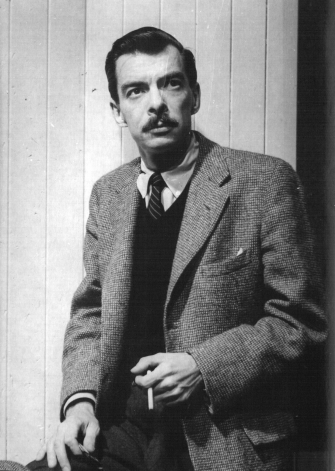 Weldon Kees
1. One book that changed your life: The Voice That Is Great Within Us: American Poetry of the Twentieth Century, edited by Hayden Carruth (Bantam Books, 1970). When I was about fifteen years old, I stole this chubby little paperback in an act of adolescent bravado/stupidity. Most of my experience with poetry up to that point had come via rock and roll. (“I am the Lizard King. I can do anything.”) Poetry on the page seemed a little uncool, something forced upon me by an unforgiving educational institution. Suddenly, with this book, a new world blossomed open; it was like a lightning flash that opened up a magical door. In the work of poets such as Frank O’Hara, Weldon Kees, and T.S. Eliot, I found a whole range of new and interesting voices. The stories they told me about life weren’t the same stories I had gotten from television, school lessons, movies or even rock music. The world out there suddenly seemed a lot bigger and more mysterious, a little darker, a little more intense, but also more intriguing and exciting. I stopped trying to write rock songs and began crafting my words for the page. After a couple of decades and many, many moves, I still have my battered and bruised copy of the book - its cover barely held on by strapping tape - and it still brings me great pleasure. Luckily, I stole a great anthology. Carruth did an excellent job with the poets he included and by choosing interesting work that wasn’t typically anthologized. He did so well, in fact, that the book is still in print after 36 years, an amazing feat for a poetry anthology.
2. One book that you've read more than once: I haven’t read that many books all the way through more than once. I tend to re-read parts of books, sometimes numerous times. I think especially of Pensées by Pascal, Cutting through Spiritual Materialism by Trungpa Rinpoche, the Bible, Sixty Stories by Donald Barthelme, and lots of poetry. I guess there are a handful of novels I’ve read straight-through twice: The Sun Also Rises, by Ernest Hemingway and The Long Goodbye by Raymond Chandler come to mind. Also Going after Cacciato by Tim O’Brien.
3. One book that you'd want on a desert island: The Norton Anthology of World Literature. From a practical standpoint, I can’t imagine a better choice. It contains 43 complete works (The Odyssey, Dante’s Inferno, Hamlet, Madame Bovary, Death in Venice, etc.) and large chunks of other major works. It also contains a good selection of texts from every major spiritual tradition. And hey, what other book can give you Sappho, Hildegard of Bingen, Rumi, García Marquez, and the dada poems of Tristan Tzara?
La Reina says this selection doesn’t count, however, because it’s a six-volume set. Like she’s suddenly an expert on Desert Island Rules & Regulations. I argue back that there’s a single ISBN and a single Library of Congress catalog record for this title, so it should be counted as one book. (I forget to mention that there are also individual ISBNs and catalog records for each volume, because that would only confuse matters.) We’re having dinner (veggie burgers and fresh green beans), and the conversation’s getting heated now. “And what about the Bible,” I add. “It’s actually a collection of books. Are you saying I could only take Ecclesiastes instead of the whole thing? You want me to tear out that part so it counts?” “But the Bible is contained within one set of covers,” she says, “so it’s okay.” “Oh, so I couldn’t take my three old paperbacks of The Lord of the Rings, but I could take a one-volume edition? That doesn’t make any sense.” This seems to confuse her. She looks like she’s getting ready to flick a green bean at me. I decide I better cool it. “Well, then, I’ll just take the one-volume edition of How to Get off a Desert Island When You’re Stuck with a Cranky Woman.” And that’s when she lovingly offers me her green bean.
4. One book that made you laugh: Sixty Stories by Donald Barthelme. La Reina says she can always tell when I'm reading Barthleme, because I have a particular kind of laugh. Kind of mischievous, she says. Brilliant, insightful, poetic, tremendously creative, and terribly funny, Barthelme ultimately conveys a great sense of wonder and humanity, as well as a deep appreciation for the tragic absurdity of life. This collection covers his work from the 1960s and 70s. Almost as good is Forty Stories, which covers some of his later work as well, including the wonderful "Overnight to Many Distant Cities." Honorable mention has to go to Without Feathers, by Woody Allen. I was reading it in the library one day in college and had to put it down because I was laughing so hard everyone started looking at me.
5. One book that made you cry: This was a tough one. I couldn't remember ever having cried while reading a book, though I figured it must have happened at some point. I've cried watching films. I've cried listening to music a number of times. Why shouldn't I cry at a book? I remember the end of Hemingway's For Whom the Bell Tolls impacting me powerfully, but I wasn't crying. I still feel haunted by that final scene, though. Reading about Lester Young, Marvin Gaye and Eric Dolphy could have easily left me in tears. I just couldn’t recall. Finally, after a few days, something popped into my head. I remember getting choked up while listening to a tape of Martin Luther King’s speech the night before he died, which reminded me that I also shed tears at some point while reading through A Testament of Hope: The Essential Writings of Martin Luther King, Jr. (Harper & Row, 1986). It could have been his “Letter from a Birmingham Jail,” or “A Christmas Sermon on Peace, 1967.” It’s a powerful collection from one of the greatest human beings of the 20th Century.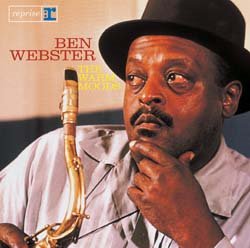 Ben Webster
6. One book you wish had been written: A novel by Raymond Carver. In his great essay, "Fires," he talks about stealing out into his car at night to scribble his short stories and how he never had the time to write a novel. After a long, brave struggle to recover from alcoholism, he finally found some success as a writer and started to attain a bit of financial security. Only to die of cancer. Life sucks sometimes. It would also be nice to read a biography of the great tenor saxophonist Ben Webster. But at least we have his music.
7. One book you wish had never been written: In response to Liam’s answer to this question, I suggested that the world might have been better off if the Bible hadn’t been written, because so much bloodshed and inhumanity had resulted from it. (The same could probably be said of other major religious works). But then we would have missed out on a lot of beautiful and meaningful writing as well. As Saint Tom said, “If I exorcise my devils, well my angels may leave, too, and when they leave, they’re so hard to find.” Plus, it’s not the fault of the book, it’s the fault of the people who interpret the book according to their own desires, in order to justify whatever crap it is they’re trying to pull. Still, if we believed that Horton Hears a Who had been inspired by G-d and decided to start using it as the sacred text of our civilization, would we really come up with the Crusades again?
8. One book you're currently reading: The Revenge of God: the resurgence of Islam, Christianity, and Judaism in the modern world, by Gilles Kepel. (Originally published in France in 1991, translated by Alan Braley for Penn State University Press, 1994.) Kepel is a leading French scholar of Islam, Professor of Political Science in Paris. His book Jihad: On the Trail of Political Islam is considered by some to be one of the essential texts right now on what’s happening in the Middle East. (See, for example, Juan Cole’s useful Reading List.) I read Kepel's Bad Moon Rising, his (short) personal journal of traveling in the Middle East and the U.S. right after 9/11 and thought it was a unique and lyrical work. The Revenge of God is a more straightforward look at similarities between Islam, Christianity and Judaism as they have responded over the last half-century to “the crisis of modernism” and the perceived threats of secular humanism. He discusses attempts at re-Christianization, re-Islamization, and re-Judaization “from above” (by seizing political power, i.e. Khomeini and the Iranian revolution) and “from below” (via longterm grassroots efforts that can eventually exert political pressure, i.e. the Religious Right in the U.S.) Catholics may find his discussion of Vatican II interesting for being slightly different than one might expect, and for his foresight (he wrote this in 1991) in focusing on a prime mover in the Vatican’s efforts at re-Christianization, a certain Cardinal Ratzinger. He also spends a fair amount of time analyzing the Communion and Liberation movement in Italy, which I knew nothing about, and the charismatic movement in France that was inspired by the charismatic movement in the U.S. a decade earlier. (French charismatics, who knew?! I can only imagine what they sound like speaking in tongues. And how bitchy they get if you don’t speak in tongues as well as they do.) Of course, given Kepel’s background, the strength of the book is probably in his look at Islam and the various movements within it during the last part of the 20th century. I haven’t gotten to the part about the religious right in the U.S., but I did read criticism of that part of the book in a review, that it wasn't a very thorough or accurate analysis. I also haven’t gotten to the part about Judaism, so I don’t know what he covers there. His book is similar to the last part of Karen Armstrong’s Islam, which also discusses militant Islam and fundamentalist Christianity as reactions to a world that has lost its sense of the spiritual in the aftermath of the Enlightenment. It’s an interesting topic, and I find both of their takes on it to be respectful yet concerned, which is I guess where I find myself. I’d like to think that there’s a healthier middle ground than the extremes of Stalinism on one hand and al-Qaeda or the Moral Majority on the other. As I look around right now, I see religion to blame in part or entirely for much of the worst violence taking place in our world – militant Islamic terrorism, the U.S invasion of Iraq, the Israeli-Palestinian nightmare, and the disturbing Pakistani-Indian situation, just to mention a few. I think it’s time for everyone to chill out and put their gods back in their holsters. I doubt Kepel is going to mention any positive paths forward in this book; he’s mainly interested in looking at how we got to this point. That other book is still waiting to be written. And it will be – because this topic is only going to become more important as the 21st century plods forward.
9. One book you've been meaning to read: Ulysses by James Joyce. One of these days, one of these days. I keep waiting for the movie version, but no such luck.
Subscribe to:
Posts (Atom)