Showing posts with label John Edwards. Show all posts

Thursday, December 11, 2008

The 10 Worst Predictions for 2008

Foreign Policy has the full list. Here are some highlights:

1. “If [Hillary Clinton] gets a race against John Edwards and Barack Obama, she’s going to be the nominee. Gore is the only threat to her, then. … Barack Obama is not going to beat Hillary Clinton in a single Democratic primary. I’ll predict that right now.”

—William Kristol, Fox News Sunday, Dec. 17, 2006

After Iowa, Kristol lurched to the other extreme, declaring that Clinton would lose New Hampshire and that “There will be no Clinton Restoration.” It’s also worth pointing out that this second wildly premature prediction was made in a Times column titled, “President Mike Huckabee?” The Times is currently rumored to be looking for his replacement.

2. “Peter writes: ‘Should I be worried about Bear Stearns in terms of liquidity and get my money out of there?’ No! No! No! Bear Stearns is fine! Do not take your money out. … Bear Stearns is not in trouble. I mean, if anything they’re more likely to be taken over. Don’t move your money from Bear! That’s just being silly! Don’t be silly!”

—Jim Cramer, responding to a viewer’s e-mail on CNBC’s Mad Money, March 11, 2008

Six days after the volatile CNBC host made his emphatic pronouncement, Bear Stearns faced the modern equivalent of an old-fashioned bank run. Amid widespread speculation on Wall Street about the bank’s massive exposure to subprime mortgages, Bear’s shares lost 90 percent of their value and the investment bank was sold for a pittance to JPMorgan Chase, with a last-minute assist from the U.S. Federal Reserve.

3. “[In] reality the risks to maritime flows of oil are far smaller than is commonly assumed. First, tankers are much less vulnerable than conventional wisdom holds. Second, limited regional conflicts would be unlikely to seriously upset traffic, and terrorist attacks against shipping would have even less of an economic effect. Third, only a naval power of the United States’ strength could seriously disrupt oil shipments.”

—Dennis Blair and Kenneth Lieberthal, Foreign Affairs, May/June 2007

On Nov. 15, 2008 a group of Somali pirates in inflatable rafts hijacked a Saudi oil tanker carrying 2 million barrels of crude in the Indian Ocean. The daring raid was part of a rash of attacks by Somali pirates, which have primarily occurred in the Gulf of Aden. Pirates operating in the waterway have hijacked more than 50 ships this year, up from only 13 in all of last year, according to the Piracy Reporting Center. The Gulf of Aden, where nearly 4 percent of the world’s oil demand passes every day, was not on the list of strategic “chokepoints” where oil shipments could potentially be disrupted that Blair and Lieberthal included in their essay, “Smooth Sailing: The World’s Shipping Lanes Are Safe.”

Hopefully, Blair will show a bit more foresight if, as some expect, he is selected as Barack Obama’s director of national intelligence.

5. “[A]nyone who says we’re in a recession, or heading into one—especially the worst one since the Great Depression—is making up his own private definition of ‘recession.’”

—Donald Luskin, The Washington Post, Sept. 14, 2008

The day after Luskin’s op-ed, “Quit Doling Out That Bad-Economy Line,” appeared in the Post, Lehman Brothers filed for bankruptcy, and the rest is history. Liberal bloggers had long ago dubbed the Trend Macrolytics chief investment officer and informal McCain advisor “the Stupidest Man Alive.” This time, they had some particularly damning evidence.

10. “I believe the banking system has been stabilized. No one is asking themselves anymore, is there some major institution that might fail and that we would not be able to do anything about it.”

—Henry Paulson on National Public Radio, Nov. 13, 2008

Unfortunately for Paulson, shortly after his vote of confidence, Citigroup’s stock price plunged 75 percent in one week, closing below $5 for the first time in 14 years.
My own worst predictions for 2008:

1. Bill Richardson would become president. (I even put money on that one.)
2. Bill Richardson would become Secretary of State.
3. John Edwards would become president. (I even put money on that one.)
4. John Edwards would become Attorney General.
5. I would win the Nobel Prize for Literature.
6. Liam would win the Nobel Prize for Literature.
7. Liam would at least finish has dissertation.
8. Hillary Clinton would become president.
9. The Beatles would finally re-unite.
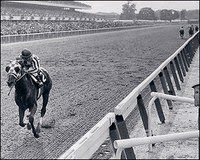
10. Big Brown would win become the first Triple-Crown winner in 30 years.
11. Obama would win the popular vote in the Texas primary, putting an end to the Clinton campaign.
12. My wife would throw me out of the house for listening to Waylon Jennings so much. (Thanks, dear.)
13. Spain would find a way to lose the Euro2008 Finals match against Germany. (Viva España!)
14. The Democrats would find yet another way to lose the presidential election. (Viva Obama!)
15. Fred Astaire and/or Lester Young would finally be recognized with a National Holiday.

Thursday, May 15, 2008

Misreading Endorsements

John Edwards endorsed Barack Obama yesterday. It's a crucial endorsement for Obama, but I've been amazed at how badly the pundits are misreading the situation.

Actually, I shouldn't be amazed at all, because they did the same thing with the endorsements of Ted and Caroline Kennedy earlier in the contest. In fact, some of them still don't get it. New York Times writer Jim Rutenberg is quoted in a Caucus blog post today: "Mr. Obama was not greatly helped when Caroline Kennedy, Senator Edward M. Kennedy and other big-name Democrats supported him earlier this year."

Pundits like Rutenberg usually point to the fact that Kennedy didn't magically win the state of Massachusetts for Obama or bring in lots of Latino voters on Super Tuesday, February 5th. But votes were never the main point of the Kennedy endorsement.

Instead, the support of Ted and Caroline Kennedy sent out a clear signal that major figures within the Democratic Party establishment were getting behind Obama. That was absolutely essential for a relative newcomer to the national scene like Obama to have any chance against the well-oiled, deeply entrenched, and and far-reaching machine of the Clintons.

Bill and Hillary were furious at Ted Kennedy for not staying neutral. They knew even then that it meant the Democratic establishment wasn't fully behind them. (Nobody, as far as I know, has ever analyzed why the Democratic establishment was never fully behind the two most public figures in the party - a two-term Senator married to the only two-term Democratic president since FDR. Funny that.)

I would argue, in fact, that the Kennedys' endorsements and the stunning overall results for Obama on February 5th were major factors in dismantling the inevitability argument of the Clinton campaign.

Now, the pundits are failing again - and miserably - in regards to the Edwards endorsement. Last night, I listened to one pundit after another talking about John Edwards helping Obama with those less-educated white voters making less than $50,000 a year. This morning, I stared in disbelief at a headline on the Yahoo homepage that said: "John Edwards brings blue collar voters to Barack Obama." (That's totally one person's opinion, and an opinion that's not even based on evidence. Yet it goes out as "news." Is this post-Bush journalism?)

Sorry folks, but John Edwards ain't gonna magically bring the white working class over to Barack Obama. Nor will he suddenly make the Kentucky primary competitive next Tuesday. The pundits have made a truly asinine assumption: 1) Obama has a problem with white voters who make less than $50,000 a year and have lower levels of education. 2) Edwards is white, has the support of the Steelworkers Union, and talks about poverty. 3) Therefore, Edwards' endorsement will resolve Obama's problem.

But as I pointed out earlier in the primaries, Edwards message about poverty never actually resonated with the poor. Nor with the under-educated.

Edwards came in second place in Iowa, winning 30% of the vote. Among people who earn less than $15,000, Edwards did terribly, only getting 17% of the vote. (Obama got 37% of their vote and Clinton got 30%.) Edwards' best numbers, in fact, were among those making over $100,000. He also did badly among Union Households, coming in third with only 24%, compared to 30% each for both Obama and Hillary.

So in Iowa, his best performance, Edwards underperformed significantly among the very groups the pundits now say he's going to somehow deliver to Obama.

There was no education level information in the Iowa polls, but in New Hampshire and South Carolina, Edwards did poorly. He received 17% of the vote in New Hampshire but only got 11% of the vote of Democrats who didn't finish high school. In South Carolina, he received 18% of the overall vote but only got 14% of those without a high school diploma.

And, as in Iowa, he did badly again among those making less than $50,000, especially among the poorest, who made less than $15,000, and he underperformed in Union households.

So, can someone please point to actual evidence that Edwards' endorsement will make much difference with the kind of voters who thoroughly rejected Obama in West Virginia and will do so again in Kentucky?

This isn't to say that Edwards endorsement isn't important. It is. But the pundits are setting up a bad situation for Obama by making it appear that Edwards should help him with working-class whites next week in Kentucky. Tuesday night, when Obama is getting his ass kicked by Clinton, get ready for all the "Aha, Edwards endorsement didn't mean anything!" crap.

It's an important point, because Obama does have a problem with this group of voters, and it's going to hurt him in the general election unless he can figure out a way to bridge the gap more. What will not help him are blaring and endlessly repeated comments that Obama must really be in trouble with these voters because even John Edwards' incredible influence on blue-collar voters somehow couldn't erase a 30-point lead in 5 days. Look for this narrative to play out Tuesday night and beyond.

Edwards' endorsement helped Obama yesterday, primarily because it obliterated (brilliantly) a continued discussion of Hillary's crushing victory in West Virginia. (41 points! - 41 points! "Danger, Will Robinson, Danger!")

And it was important because, like the Kennedy endorsements earlier, it sends a clear signal from major Democratic Party figures - in this case, that the contest is over.

Or, at least, that they want it to be over.

(I don't think the Clintons will agree.)

Partly because of the endorsement, look for more and more super delegates to move over to Obama in the next few days. He won't close the 30-point gap he's facing in Kentucky, but he will continue to lengthen his lead among super delegates.

After Oregon, he will also secure the majority of pledged delegates.

The only major metric he still has to worry about is the popular vote. And he should worry about that, because his abysmal showings in West Virginia and Kentucky are going to make the race much closer than it had to be.

Wednesday, February 06, 2008

The Edwards Effect(s)

There's an interesting interview with Joe Trippi, one of John Edwards' chief strategists, at The New Republic. (h/t Susie Madrak at Suburban Guerrila.)

There's no doubt the progressive agenda was moved forward in a big way by John Edwards and the campaign. I worry about what would have happened had he not been in. The Clintons might not have proposed a health care plan, because they didn't want the details to be knocked around by an opponent. That's a fact. That's what she was saying in the early stages. He put a universal health care plan out there first; he was the first one, really, with a stimulus plan; with a strong global warming policy, you name it; including pushing her on the war initially when no one would take her on on it. Just about every point, any issue that mattered. Both candidates--Obama and Clinton--were pushed to take stronger progressive positions than either was likely to take.
In his interview, Jow Trippi also had some interesting things to say about Obama versus Clinton:

One of the reasons Obama has to be worried about the California debate is that suddenly there's a celebration going on about how no matter who wins the Democratic nomination, there's going to be big change. Who the hell's spinning that? The Clinton campaign's spinning that line. That's a huge danger for Barack Obama. The Edwards campaign helped define Clinton as the status quo candidate in this race. Left to that definition, the change candidate would win this thing. The Clinton campaign understands that. That's why they're being so, as they always are, so damn efficient. Everyone understands now that, no matter who wins, it's big change. The Obama campaign let that stand. All the way through the California debate, he never challenged her, never said she was status quo. You can already see the problem with us being out. Think about what Edwards would have done--there's no way that would have stood. I'm not getting into their debate strategy. The whole thing is a very dangerous position for Obama to be in. If they're both change candidates, why not vote for her?

In Iowa, we were spending months talking about her being the status quo candidate. Women in Iowa, were saying, "You know, she is [status quo]. I'm not voting for her." She lost women. Lost white women in Iowa. The reason she lost them is because, over that whole period, white women in Iowa were seeing Edwards talk every day, we're making the case. They come to believe that she's carrying Washington's water, not theirs. In New Hampshire we only have five days. We didn't spend a ton of time in New Hampshire. All these women are going to vote for her, they don't know about her taking lobbyists' money. We only do a mild kind of push back, one time in the debate. She is a change candidate in New Hampshire.

All the way to South Carolina, they're doing the old stuff. They're raising the race thing, innuendo. But what is that? The old garbage, not change. Whenever she's the change candidate, she kicks butt. When she's status quo, politics as usual, taking the money, she not only doesn't win, she gets clobbered. So, now--guess what? I don't know what's going to happen Tuesday, we'll see. It's not good to let her be the change candidate.
It's interesting to see how many votes Edwards received in the California primary on Super Tuesday, due mainly to early voting (up to 2,000,000 votes cast early.) How much of an effect did this have on the other two candidates?

There's no easy way to tell what most former Edward supporters have done after he dropped out of the race - choose Obama or Clinton, keep voting for Edwards, or not vote at all. But it's interesting to compare two Gallup/USA Today polls, one from just before Edwards withdrew from the race and the other from a few days ago:

Jan 10-13: Clinton 45% - Obama 33% - Edwards 13%
Jan 31-Feb2: Clinton 45% - Obama 44%

There were numerous factors during that time that might've contributed to Obama's surge: Obama's big win in South Carolina, the Kennedy endorsements, etc. But for the sake of argument, let's say that a good number of Edwards voters have moved over to Obama. (Except, of course, for Paul Krugman.)

Remember, California awards a large number of delegates in a proportional manner by congressional district. Here are some county results that caught my eye:

BUTTE: Clinton 45% - Obama 44% - Edwards 8%
DEL NORTE: Clinton 48% - Obama 40% - Edwards 9%
EL DORADO: Clinton 46% - Obama 43% - Edwards 8%
INYO: Clinton 45% - Obama 42% - Edwards 10%
LASSEN: Clinton 42% - Obama 41% - Edwards 14%
MARIPOSA: Clinton 46% - Obama 41% - Edwards 11%
MODOC: Clinton 45% - Obama 40% - Edwards 12%
PLACER: Clinton 48% - Obama 42% - Edwards 8%
SHASTA: Clinton 47% - Obama 39% - Edwards 11%
SOLANO: Clinton 49% - Obama 45% - Edwards 5%

That's 10 counties out of 58.

Obviously, in the end, it's impossible to know how much effect the early Edwards votes had. But one wonders if this didn't take away from Obama's delegates to some degree.

REVISED VERSION.

Monday, January 28, 2008

Edwards as Attorney General?

Liam and I have both supported Edwards, and we've been discussing what his goal might be, now that the nomination seems to have slipped away for good. As I mentioned yesterday, Edwards still seemed energized during his concession speech on Saturday night, as if he were a man on a mission. But what, I wondered, was the mission?

Liam commented, "I'm trying to figure out Edwards as well at this point. Has he gone completely Quixotic or does he have something up his sleeve?"

Well, moments after reading Liam's comment's, I came across the following at Rassmussen Reports: "Attorney General Edwards?" Lord knows I hate linking to a Robert Novak column, but I did find the rumor interesting - and somewhat plausible. When I was ruminating on possible cabinet positions for Edwards, I somehow overlooked Attorney General. This is Novak's column in full:

Illinois Democrats close to Sen. Barack Obama are quietly passing the word that John Edwards will be named attorney general in an Obama administration.

Installation at the Justice Department of multimillionaire trial lawyer Edwards would please not only the union leaders supporting him for president but organized labor in general. The unions relish the prospect of an unequivocal labor partisan as the nation's top legal officer.


In public debates, Obama and Edwards often seem to bond together in alliance against front-running Sen. Hillary Clinton. While running a poor third, Edwards could collect a substantial bag of delegates under the Democratic Party's proportional representation. Edwards then could try to turn his delegates over to Obama in the still unlikely event of a deadlocked Democratic National Convention.
UPDATE: More on this from The Washington Post's "The Trail" blog:
John Edwards for Attorney General?

That's an idea that has been gaining currency among some of his closest supporters -- U.S. trial lawyers who gathered this weekend in Puerto Rico for an annual winter conference.

"I sure would hope there will be a role for him," said Gibson Vance, a Mongtomery, Ala., trial lawyer who has been a longtime friend and supporter of Edwards. "He would be a heck of a tough attorney general. Think about it."

Vance said he is still strongly supporting Edwards's presidential bid. But if that doesn't work out, he said many trial lawyers would like to see the eventual Democratic nominee find a role for Edwards on his or her team. Given Edwards's success as a litigator, they say, the AG job would be great fit.

Sunday, January 27, 2008

South Carolina and Beyond - The Democrats

Wow. Someone opened a big can of Whoop-Ass in South Carolina yesterday.

Obama - 295,091 - 55%
Clinton - 141,128 - 27%
Edwards - 93,552 - 18%
Kucinich - 551 - 0%

The delegate count: Obama 25, Clinton 12, Edwards 8.

It was an impressive win for Obama, especially after 10 days of ugly tactics by "the two-headed monster" (as the New York Post called the Clintons). Everyone always lauds Bill Clinton's political acumen (myself included), but did his tactics backfire this time? Or was South Carolina just the price paid for a successful longterm strategy? Have they turned Obama into a "black candidate" who can't win anywhere outside of the South? As one of the analysts said on TV last night, there had been questions earlier in the race if Obama was "black enough." The Clintons, she said, have made him black enough. Obama received an astounding 81% of the African-American vote in South Carolina. It's astounding because Hillary actually had more support among blacks only a short while ago.

After getting their asses kicked, the Clintons were graceful in defeat. Hillary fled the state and didn't bother to give a concession speech. Bill, the first Clinton to speak publicly after the results, said earlier in the day, "Well, Jesse Jackson won South Carolina in '84 and '88."

Just to clarify, the Associated Press reported: "Clinton campaign strategists denied any intentional effort to stir the racial debate. But they said they believe the fallout has had the effect of branding Obama as 'the black candidate,' a tag that could hurt him outside the South."

Well, thank goodness the Clintons are done with the race-baiting.

John Edwards finished in third place but vowed to stay in the race. Perhaps, after a few days to think things over, he actually will withdraw. Third-place finishes in Nevada and South Carolina mean any hope of the nomination - always a long shot - is really over. Watching his concession speech (not every candidate skips them), I was struck by the sense that he's a man on a mission. I just don't know what the mission is, exactly.

Still upbeat, he promised that those who are poor and unfortunate would have their voices heard, because he's staying in the race. I thought his strategy for a while was to stay close enough in case one of the top two candidates got into trouble and had to drop out. But that doesn't seem likely anymore. There have been articles about Edwards playing a king-maker role at the national convention. If he continues to gain delegates and neither Obama or Clinton have enough to win the nomination outright, Edwards would be in a powerful position. While I suppose that's a possibility, it doesn't seem likely to me. Does he want to be someone's vice president? That doesn't seem likely either. A nice cabinet position? Maybe. But can you really see Edwards wanting to be Secretary of Housing and Urban Development? Last night, listening to him, it seemed like he had something in mind. Maybe just to raise the issue of poverty? I don't know. Though I hope he stays in the race, my gut feeling is that he will drop out, probably soon. But my gut feeling also told me the New York Jets (3-13) would be in the playoffs this year.

Though I continue to have serious questions about Obama as a candidate, I can't deny his impressive way with words. His victory speech last night may have been the best I've ever seen him give. While he continues with his hopeful message, it was mixed last night with a sense of righteous anger at what he's been through over the last two weeks. It worked well. He seemed tougher, to me, which I liked. At times last week, he seemed befuddled, unable to figure out how to handle the Clintons. With this speech, he seems to have found a way: Maintain the high road, keep focused on hope, but get a little angry at the cynical forces trying to deny or destroy that hope. Here are excerpts from the speech. [The video captures it better.]

[R]ight now, that status quo is fighting back with everything it’s got; with the same old tactics that divide and distract us from solving the problems people face, whether those problems are health care they can’t afford or a mortgage they cannot pay.

We are up against the conventional thinking that says your ability to lead as President comes from longevity in Washington or proximity to the White House. But we know that real leadership is about candor, and judgment, and the ability to rally Americans from all walks of life around a common purpose – a higher purpose.

We are up against decades of bitter partisanship that cause politicians to demonize their opponents instead of coming together to make college affordable or energy cleaner; it’s the kind of partisanship where you’re not even allowed to say that a Republican had an idea – even if it’s one you never agreed with. That kind of politics is bad for our party, it’s bad for our country, and this is our chance to end it once and for all.

We are up against the idea that it’s acceptable to say anything and do anything to win an election. We know that this is exactly what’s wrong with our politics; this is why people don’t believe what their leaders say anymore; this is why they tune out. And this election is our chance to give the American people a reason to believe again.

And what we’ve seen in these last weeks is that we’re also up against forces that are not the fault of any one campaign, but feed the habits that prevent us from being who we want to be as a nation. It’s the politics that uses religion as a wedge, and patriotism as a bludgeon. A politics that tells us that we have to think, act, and even vote within the confines of the categories that supposedly define us. The assumption that young people are apathetic. The assumption that Republicans won’t cross over. The assumption that the wealthy care nothing for the poor, and that the poor don’t vote. The assumption that African-Americans can’t support the white candidate; whites can’t support the African-American candidate; blacks and Latinos can’t come together.

The choice in this election is not between regions or religions or genders. It’s not about rich versus poor; young versus old; and it is not about black versus white.

It’s about the past versus the future.

It’s about whether we settle for the same divisions and distractions and drama that passes for politics today, or whether we reach for a politics of common sense, and innovation – a shared sacrifice and shared prosperity.

There are those who will continue to tell us we cannot do this. That we cannot have what we long for. That we are peddling false hopes.

But here’s what I know. I know that when people say we can’t overcome all the big money and influence in Washington, I think of the elderly woman who sent me a contribution the other day – an envelope that had a money order for $3.01 along with a verse of scripture tucked inside. So don’t tell us change isn’t possible.

When I hear the cynical talk that blacks and whites and Latinos can’t join together and work together, I’m reminded of the Latino brothers and sisters I organized with, and stood with, and fought with side by side for jobs and justice on the streets of Chicago. So don’t tell us change can’t happen.

When I hear that we’ll never overcome the racial divide in our politics, I think about that Republican woman who used to work for Strom Thurmond, who’s now devoted to educating inner-city children and who went out onto the streets of South Carolina and knocked on doors for this campaign. Don’t tell me we can’t change.

Yes we can change.

Yes we can heal this nation.

Yes we can seize our future.

And as we leave this state with a new wind at our backs, and take this journey across the country we love with the message we’ve carried from the plains of Iowa to the hills of New Hampshire; from the Nevada desert to the South Carolina coast; the same message we had when we were up and when we were down – that out of many, we are one; that while we breathe, we hope; and where we are met with cynicism, and doubt, and those who tell us that we can’t, we will respond with that timeless creed that sums up the spirit of a people in three simple words:

Yes. We. Can.

One of the most exciting aspects about yesterday was the record turnout and what it could mean in a general election:
"More than 532,000 people cast ballots yesterday in a state that hasn't voted for the Democrat in the presidential general election in three decades. That is almost double the number who voted in the 2004 primary and 100,000 more than voted in the Republican contest a week earlier."
An interesting note: Though I haven’t seen any news yet, the polls in South Carolina were actually more off target than they were in New Hampshire. Just to give one example, Zogby, which has probably been registering the most accurate numbers in the primaries, had Obama at 41%, +/- 3.4 percentage points in their final poll on Friday. If you take into account the margin of error, Zogby still underestimated Obama's vote by 11%. In New Hampshire, Zogby underestimated Hillary Clinton’s numbers by 6.6%. This was true of other polling outfits as well. I suppose because the outcome was the same as expected, unlike in New Hampshire, no one bothered to mention it.

In both New Hampshire and South Carolina, a higher-than-expected turnout seems to have caused pollsters problems, but only in regards to the ultimate winner. Evidently, last-minute momentum swings for a particular candidate have been dramatic. For the other candidates, the poll numbers in both cases were fairly accurate.

And, if you somehow missed it, Caroline Kennedy endorsed Obama today in an Op-Ed in the New York Times, "A President Like My Father."
OVER the years, I’ve been deeply moved by the people who’ve told me they wished they could feel inspired and hopeful about America the way people did when my father was president. This sense is even more profound today. That is why I am supporting a presidential candidate in the Democratic primaries, Barack Obama.

My reasons are patriotic, political and personal, and the three are intertwined. All my life, people have told me that my father changed their lives, that they got involved in public service or politics because he asked them to. And the generation he inspired has passed that spirit on to its children. I meet young people who were born long after John F. Kennedy was president, yet who ask me how to live out his ideals.

Sometimes it takes a while to recognize that someone has a special ability to get us to believe in ourselves, to tie that belief to our highest ideals and imagine that together we can do great things. In those rare moments, when such a person comes along, we need to put aside our plans and reach for what we know is possible.

We have that kind of opportunity with Senator Obama. It isn’t that the other candidates are not experienced or knowledgeable. But this year, that may not be enough. We need a change in the leadership of this country — just as we did in 1960.

Senator Obama is running a dignified and honest campaign. He has spoken eloquently about the role of faith in his life, and opened a window into his character in two compelling books. And when it comes to judgment, Barack Obama made the right call on the most important issue of our time by opposing the war in Iraq from the beginning.

I want a president who understands that his responsibility is to articulate a vision and encourage others to achieve it; who holds himself, and those around him, to the highest ethical standards; who appeals to the hopes of those who still believe in the American Dream, and those around the world who still believe in the American ideal; and who can lift our spirits, and make us believe again that our country needs every one of us to get involved.

I have never had a president who inspired me the way people tell me that my father inspired them. But for the first time, I believe I have found the man who could be that president — not just for me, but for a new generation of Americans.

Going forward, it's clear that the Clintons have the advantage on Super Tuesday. Hillary is leading in three of the four major states: California, New York, and New Jersey. Obama leads by 2-to-1 in Illinois. But Obama has three things going for him:

1) I think the Clintons angered a lot of people last week, and not just African-Americans in South Carolina. Bill Clinton's tactics have been called undignified by many leaders within his own party. And the media seemed much more willing to challenge him on his statements. They actually seemed angered as well, with a number of pointed articles and columns about his actions. (One of my favorites: Jon Meachem, Editor of Newsweek, appearing on Jon Stewart's show, said, "Now we have the husband running around loose. He's sort of King Lear with a southern accent.Wandering around out there ")

2) Obama's victory in South Carolina was enormous. Unlike all of the other contests to this point, this one wasn't even close. And it's not just about Obama getting 81% of the black vote. He also beat Hillary 2-to-1 among younger white voters, and did well in a race against a white male who was born in South Carolina (Edwards) and a white female. He won every age category, beating Hillary overall among 18-49 year-olds by almost a 3-to-1 margin. The huge turnout and the excitement of such a big win will be a big boost in the next ten days.

3) Obama has the momentum right now, among leading Democrats (Daschle and Kerry both slammed Bill Clinton last week for his tactics, and Ted Kennedy is about to endorse Obama), among the media (though they're not supposed to take sides, I think they were turned off by the Clintons over the last two weeks), and among the public. He has the money to compete across all of the states. And I think he's found his way to take on the Clintons.

It probably won't be enough to come out ahead on Super Tuesday, but I don't think Hillary Clinton will be so far ahead that Obama won't be able to compete afterwards. This is shaping up to be a long race.

Wednesday, January 16, 2008

Martin Luther King III on Hillary's Comment

Martin Luther King III at Riverside Church in New York City, January 15, 2007.

I've actually been wondering what he thought about it all.

From today's Boston Globe article, "King's son says Clinton erred," by David Abel:

King, son of the Rev. Martin Luther King Jr. and Coretta Scott King, said he thought the controversy had been blown out of proportion. However, he also said that Clinton's words were potentially denigrating.

"I wish it was said in a different way," he said before addressing a packed Twelfth Baptist Church in Roxbury, where his father once preached.

He added later: "What I think, fundamentally, is that, between the media and the two candidates, a lot is being stirred up. What I assume she was trying to say is that a president needs leadership and vision. I don't believe her intent was to diminish my dad."

In an interview after his address, King said he has not ruled out making an endorsement in the presidential campaign.

"I've been neutral," he said. "I don't know if that's going to change. I was very excited about the fact that Senator Obama was able to win the Iowa primary. I think that was extremely significant. I'm not endorsing anyone at this point. You don't ever want to say you're not going to, but some of that will be a family decision."

He said he wants to see "the best candidate emerge to the top."

"We're blessed to have three candidates still in the race on the Democratic side who would make great presidents," he said. "On the Republican side, I'm not as clear. What I mean by that is that I haven't seen them come forward and embrace the agenda for black and poor people."

Interestingly, a year ago yesterday, King III was introducing John Edwards at an address Edwards gave at Riverside Church in New York City.

From Associated Press, January 15, 2007:
Edwards addressed about 1,200 parishioners Sunday at Riverside Church, a multiracial, politically active Manhattan congregation where King delivered his famous "Beyond Vietnam" speech on April 4, 1967. King was assassinated exactly one year later.

Edwards spoke from the same wooden pulpit King used and was introduced by King's son, Martin Luther King III. The younger King said his father would have admired Edwards' commitment to fighting poverty.

The Las Vegas Democratic Debate

After Tuesday night's debate, Frank Luntz at Fox News led a focus group from Las Vegas of thirty undecided Nevada Democrats. John Edwards did the best among the candidates.

Luntz:

"How many of you thought John Edwards won?" [1/2 crowd raises hand]

"How many of you came in supporting Senator Edwards?" [About 3 people raise hand]

"On issue after issue, we're going to show this to you tomorrow night, his language actually scored better than Senator Clinton and Senator Obama."

[Fox News, 1/15/08]

Hat tip to Susie Madrak for the lead.

Her take: "Not that it will actually change the media coverage, but I thought you’d like to know."

Exactly.

Tuesday, January 08, 2008

News and No News

Glenn Greenwald at Salon on the "Surge" you haven't heard about, and why:

Is there any distinction between what a "reporter" does and what a "pundit" does covering this campaign? There doesn't seem to be any.

As but one example, consider this new daily tracking poll today from Rasumussen Reports. At least according to this poll, it is true that there has been one candidate who has been genuinely surging in the last week or two among Democratic voters nationally -- John Edwards:

Edwards -- who, just one week ago, was 10 points behind Obama nationally among Democrats -- is now only two points behind him. Less than a month ago, he trailed Clinton by 29 points. Now it's 13 points. He is, by far, at his high point of support nationwide.

Yet to listen to media reports, Edwards doesn't even exist. His campaign is dead. He has no chance. They hate Edwards, hate his message, and thus rendered him invisible long ago, only now to declare him dead -- after he came in second place in the first caucus of the campaign.

There are certainly horse-race counterarguments to all of this. This is only one poll. Obama is ahead in New Hampshire, where his support has increased, etc. etc.

But I'm not focusing on the accuracy of horse-race predictions here, but instead, on the fact that the traveling press corps endlessly imposes its own narrative on the election, thereby completely excluding from all coverage plainly credible candidates they dislike (such as Edwards) while breathlessly touting the prospects of the candidates of whom they are enamored. Their predictions (i.e., preferences and love affairs) so plainly drive their press coverage -- the candidates they love are lauded as likely winners while the ones they hate are ignored or depicted as collapsing -- which in turn influences the election in the direction they want, making their predictions become self-fulfilling prophecies.

It's just all a completely inappropriate role for political reporters to play, yet it composes virtually the entirety of their election coverage.
And now for a newsflash from across the pond . . .

BBC: Recession in the US 'has arrived'
Times (London): Merrill calls US recession
Daily Telegraph: US recession is already here, warns Merrill
Scotsman:
Banking giant warns US economy in recession

Meanwhile, back at the ranch . . .

New York Times: Bush Admits Economy Faces Challenges
“We cannot take growth for granted,” Mr. Bush said in a speech to a group of business leaders in which he acknowledged that “recent economic indicators have become increasingly mixed.”
On top of it all, the beloved Golden Globe Awards show has been canceled because of some scruffy, sushi-eating, latte-drinking, left-wing, pinko writers out on strike.

(In my book, anyone who can get an awards show canceled should be considered a HERO!)

But don't despair, Jon Stewart and Stephen Colbert have returned.

Saturday, January 05, 2008

Iowa and Beyond - The Democrats


As political sage David Bowie once said: "Ch-ch-ch-changes. . . ." Obviously, Barack Obama listened to early Bowie more than Hillary Clinton did. (That's not so hard to imagine, is it?) After a year of waiting and wondering, Iowa Democrats took the first concrete step in choosing a candidate for the 2008 Presidential Election, deciding that Change was more important than Experience. Obama won a stunning victory, with 38% of the complicated caucus vote. Clinton, the front-runner for all of 2007, wound up with a humbling third place finish, at 29%, just behind John Edwards, who pulled in 30%.

"Can Bring Change" was the Top Candidate Quality chosen by Iowa Democrats - 52% of them - according to CNN's survey of people entering the caucus on Thursday. That was far ahead of "Experience," which was most important for only 20%. Obama completely dominated the first quality, while Hillary dominated the second. In fact, Obama only got 5% of the vote among the latter group.

"Cares About People" was third most important quality, at 19%. Edwards dominated that quality and also did best among those who thought "Electability" was most important - but only 8% of the voters did.

Obama also won overwhelmingly among 17-29 year olds, receiving 57% of their vote, compared to 14% for Edwards, 11% for Hillary and 10% for Richardson. That's not really surprising, as Obama has been leading among younger voters for a long time; the biggest surprise was that the 17-29 year-olds actually got out and voted this time. They accounted for the same percentage of voters (22%) as the 65+ age group, a highly unusual result. One wonders if this portends another effect of the internet on political campaigns. Can MySpace and Second Life really get young people to hit the voting booths? Maybe more than I thought.

One of the most interesting aspects of Iowa was that voter turnout for Democrats was the highest ever recorded, and most of the new voters went for Obama. It will be interesting to see if new voters and younger voters continue to turn out in other states. If so, Obama will probably be the main beneficiary.

Interestingly, support by age for Obama and Clinton was directly converse: Obama's numbers went down as the voters got older - 57% of 17-29 year-olds, 42% for 30-44, 27% for 45-64, and only 18% for the 65+ group; whereas Hillary's numbers went up - 11% for 17-29, 23% for 30-44, 28% for 45-64, and 45% for 65+. Traditionally, this would be an advantage for Clinton, as voters have tended to be old white people, but this election might be different.

Then again, it might not be, and Obama may face trouble in the long run.

On the other hand, at least Barack has the rich folks behind him. In Iowa, he easily topped the other candidates among people with incomes of $100,000 or more, with 41% of their votes, compared to Edwards, who got 28%, and Clinton, who only received 19%.

And while John Edwards may care about the poor, the poor, it seems, don't really care about John Edwards. In fact, if I'm John Edwards, and I'm looking at the results from Iowa on Friday morning, I've got to wonder about the American Electorate. At least the folks in Iowa. (Or about my own ability to communicate my message.) As many commentators have pointed out, it has probably been decades since a major Democratic candidate has run a campaign as economically leftist as John Edwards. He has been the only candidate to talk consistently about poverty. He has attacked greedy corporations so much that the Des Moines Register refused to endorse him (after doing so in 2004) because of his "harsh anti-corporate rhetoric." He worked hard to court Labor Unions. His Health Care Plan has been touted by several left-leaning commentators. And Katrina vanden Heuvel, editor of The Nation, in her post-Iowa editorial, "Keep Edwards's Hope Alive, offered the following:

Some have compared Iowa's winner Barack Obama to JFK, and his elegant, broad-gauged and inspiring words of change and hope brought home the historic moment he embodies. Yet Edwards, in these last months, has reminded me of another Kennedy--Bobby--whose political and intellectual odyssey was linked to the passion and, yes, anger he felt as he witnessed grinding poverty in Appalachia and racist inequality in the barrios of the richest country in the world.
So how did Iowans respond? Among people who earn less than $15,000, Edwards did terribly, only getting 17% of the vote. (Obama got 37% of their vote and Clinton got 30%.) Edwards' best numbers, in fact, were among those making over %100,000. In terms of political ideology, Edwards did poorly among the most Liberal, only getting 16% support, compared to 40% for Obama and 24% for Clinton. Instead, he dominated among Democrats who consider themselves Conservative, getting 42% of their vote, compared to 22% for Clinton and 21% for Obama. This, of course, may simply mean that terms like "liberal" and conservative" now primarily mean "socially liberal" and "socially conservative," rather than having anything to do with economics.

But results from Union households were also bad for Edwards. Back in 1992, when Clinton I was just a governor from Arkansas, he promised Labor that he wouldn't support NAFTA, only to shove it through over their objections once he was president. So, naturally, Clinton II did well among Union households, receiving 30% of their support. Obama got 30%. Edwards, whose "anti-corporate rhetoric" was so harsh, only got 24%. Health Care? Edwards came in third again.

And despite taking an early and vocal stand against the war in Iraq, after his initial vote to support it, Edwards could only manage 17% among voters who thought Iraq was the most important issue. Hillary Clinton, who continued to support Bush and his war long after the rest of her party, received 26% of this vote.

Of course, these results are only for Iowa. There will probably be some differences from state-to-state as the primary season continues.

But there are definitely some interesting numbers to note. For example, Obama did better among women (35%) than Clinton did (30%). He also received the same percentage among male voters, whereas Clinton only received 23% from men. Edwards did equally well among both sexes.

Among African-American voters, Obama received 5 out 7 votes. The other two, Janice Jefferson and Trudy Vaughan of Des Moines, voted for Hillary.

(That was a joke. There were no results in CNN's Entrance Poll by race. Iowa is 91% white.)

While we can speculate a lot about what the Iowa results mean to the rest of the campaign, there was one concrete effect: Joe Biden and Christopher Dodd both dropped out of the race.

Who will their supporters go for now? Though their numbers aren't great - maybe 4% combined - a shift over to one candidate more than another could be important in a tight race, as New Hampshire is shaping up to be.

Richardson might also benefit from a smaller field. In New Hampshire, ABC is only including Obama, Edwards, Clinton and Richardson in their televised debate this weekend. Will Bill be able to stand out more now that he's only on stage with the other three? While he doesn't figure to do well in New Hampshire, he has said he hopes to last until the primaries move west, where he feels like he can be more competitive. My guess is that some of Biden's supporters might go towards Richardson because of his experience. Richardson actually came in second in Iowa among those who said Experience was their most important factor, and Biden also did well in that area, coming in third.

But again, there's the Bowie factor - Changes. People want a change.

Or at least the appearance of Change.

While Obama has, politically speaking, done the most to capitalize on the desire for change, is he really the candidate who could best accomplish the changes needed? Certainly being the first African-American President would be a huge and welcome change. But in terms of actually transforming policies that affect all of us, there are legitimate questions about Obama. Paul Krugman, in his December 17 New York Times column, "Big Table Fantasies," brought up the issue:
[T]here are large differences among the candidates in their beliefs about what it will take to turn a progressive agenda into reality.
At one extreme, Barack Obama insists that the problem with America is that our politics are so “bitter and partisan,” and insists that he can get things done by ushering in a “different kind of politics.”

At the opposite extreme, John Edwards blames the power of the wealthy and corporate interests for our problems, and says, in effect, that America needs another F.D.R. — a polarizing figure, the object of much hatred from the right, who nonetheless succeeded in making big changes.

I have to say that Mr. Obama comes off looking, well, naïve.

Anyone who thinks that the next president can achieve real change without bitter confrontation is living in a fantasy world.

Which brings me to a big worry about Mr. Obama: in an important sense, he has in effect become the anti-change candidate.

After reading Obama's Audacity of Hope and following his campaign to this point, I think Krugman is right to be concerned. Obama does come off at times as being a bit too precious and naive. I'd love to see everyone getting along more in this country - the lions lying down with the lambs and all that - but I think history points to conflict in accomplishing things politically. And after eight years of the Bush II administration, we need to bring about many real and consequential changes.

I would argue that Edwards would represent the biggest change in terms of economic policies, which ultimately affect so many aspects of our lives. And Richardson has consistently been the strongest - by far - about ending the war in Iraq and re-focusing our efforts in a new strategy against terrorism. And ending the war quickly would have dramatic changes on economic issues. Obama seems the most willing to change attitudes. Or at least to try. But do right-wing Evangelicals or Corporate CEOs want to change their attitudes?

Confronting Obama's rhetoric of change will now be one of the main strategies of the other Democratic candidates. In fact, the Edwards campaign started the day after Iowa, as Sam Stein pointed out on Huffington Post:
In an appearance on MSNBC, David Bonior, Edwards' campaign manager, ripped into Obama's record on health care from the time when he served in the Illinois State Senate.

"Barack Obama's kind of change is where you sit down and you cut a deal with the corporate world," Bonior said. "If you look at his record in Illinois when he had a major -- sponsored a major health bill that's what he did. He watered down with the help of the corporate lobbyist and they got a weak product out of that."

. . . [A]s the Boston Globe reported on September 23, 2007, in the process of crafting the legislation, Obama consulted with "insurers and their lobbyists" and amended the bill "more to their liking."
While Edwards and Richardson might have some luck in taking on the mantle of CHANGE, Hillary Clinton has positioned herself in such a way that it's going to be hard for her to make the same move. She also has the additional baggage of Clinton I, who - despite his popularity with many Democratic voters - doesn't exactly represent CHANGE to new and younger voters.

Still, there's a long way to go in this race. Clinton has the money and the political machine, and an expert strategist in Clinton I, to become the nominee, though Iowa was definitely a big blow. Obama can't afford to make any mistakes, especially against the Clintons. We'll see how he does as a campaign strategist over the long haul. He has the early momentum, but the race is going to remain close for a while, and momentum can change.

Edwards is going to need a substantial finish in South Carolina, along with a lot of other help. I'm not sure he has the money or the infrastructure to compete in the long run. He gambled almost everything on Iowa, and coming in second, eight points behind Obama, was a disappointing result. Richardson may stay in the race a while, though I'm not convinced that he'll suddenly win in the west, as he seems to think. But if some big story brings down one of the other candidates, it's possible he could start to compete more, but that's a long shot.

Meanwhile, as I write this . . . Andrew Sullivan tells me that Barack Obama has jumped out to a 10-point lead in New Hampshire.

My, my. Looks like we have a genuine race on our hands.

Thursday, November 29, 2007

Romney Leads All Candidates in Surprising New Poll

It's really hard to keep track of all the policy positions of the various Democratic and Republican presidential candidates, or to remember who's leading who in whichever up-to-the-minute and totally inconsequential poll. I hope this report helps clarify your choice for the next Godfather President of our country.

Wednesday, September 26, 2007

The Front-Runner

Believe it or not, October begins on Monday. Third quarter fund-raising numbers for the 2008 Presidential candidates will be released. And it’s just three and a half months before the primaries begin.

So what are analysts saying about the race for the Democratic nomination at this point? Let’s take a look:

Headline: “Clinton is the candidate to beat.”

Headline: “Clinton Appears To Be The Likely Nominee”

Headline: “Analysts And Insiders Say It's Looking Like Clinton.”

Zogby: “Given where we stand now, it's hard to see a way to stop Clinton, especially if she has a strong showing in Iowa, which she very well may have.” Zogby said Clinton swept all demographic categories, leading among all age groups, among union and non-union voters, and among self-described progressives and liberals. “This is stunning,” said Zogby. “This qualifies as juggernaut status.

Larry Sabato, Director of UVA's Center For Politics: Clinton is the candidate to beat. “Over the years, I have followed so many of these and watched the candidates and the numbers and everything. . . . I don't want to give my own Crystal Ball away, but Clinton is just running away with it. When you put all the factors together and weight them properly as I think we have done with this analysis, good luck to the others.”

Democratic strategist Donna Brazile: “I think if I were Clinton's campaign manger, I would feel comfortable now that for the last three months Hillary Clinton has been in the driver's seat.”
So, Obama, Edwards, Richardson, and the others gave it their best shot, but it looks like the Clinton Machine was simply too much for them. You wonder why they even bother staying in the race at this point?

Well, I can give you one very good reason: All of the above quotes and headlines were actually from October 2003, and they were all about Howard Dean.

Read back through the news coverage at this point in the last election and Howard Dean was the longtime front-runner, the “man to beat,” and Wesley Clark was stirring up things with his entrance into the race. In October 2003, Dean led the national polls, with Clark second, followed closely by Dick Gephardt and Joe Lieberman. (Remember Lieberman, Al Gore’s sublime choice for VP in 2000? A real, dyed-in-the-wool Democrat, Joe was. We miss you, Joe!)

John Kerry was in fifth place and couldn’t even break into double digits, eking out a measly 9%.

But National Poll numbers are never as important as poll numbers from the individual primary states, analysts like to say. So, in October 2003, Dean and Gephardt were tied in Iowa, with 26% each. Kerry was struggling at 15%. John Edwards wasn’t listed anywhere, his numbers were so pathetic.

The results in January 2004? Kerry 38%, Edwards 32%, Dean 18%, with Gephardt a distant fourth.

In New Hampshire, in October 2003, Dean was running away with the race at 40%. Kerry was tanking at 17%. Wesley Clark and John Edwards were tied at 6%.

The results in January 2004: Kerry 39%, Dean 26%, Clark 12%, Edwards 11%.

I decided to look up these quotes and headlines about Dean after I saw the following Washington Post headline: "Clinton as the Insiders' Shoo-in." (“It's official: Washington insiders believe Hillary Rodham Clinton will be the Democratic presidential nominee.")

And, of course, the guy in the White house said this week that he thought Hillary would be the nominee. I don't know about you, but the last thing I would want as a candidate right now would be George W. Bush saying he thought I would be the nominee. Hillary's staff must have ordered a lot of extra TP after that little jewel came out in the media.

Hillary Clinton may indeed wind up as the Democratic nominee. But this is a funny world we live in, and I guess I still believe that in politics, as in football, anything can happen. That's why we still play the games and still hold the elections.

We'll know more in a few months.

UPDATE: Discounting the nomination process in 2000 (Gore was a sitting VP) and 1996 (Clinton's re-election), the next example of a contested nomination for the Democrats was in 1992.

Who was the front-runner in the fall of 1991? The guy who never ran: Mario Cuomo. A November 1991 national poll in the LA Times looked like this: Cuomo 38%, Jerry Brown 11%, Douglas Wilder 7%, Clinton 6%.

The Iowa caucus that year wasn't a factor, because Iowa's senator, Tom Harkin, was a candidate and no one else contested him there. New Hampshire was the first primary test. In November 1991, Bill Clinton only had 5% support, placing him fifth behind Paul Tsongas, Bob Kerrey, Tom Harkin and Jerry Brown.

The results: Tsongas 34%, Clinton 26%, Kerrey 12%, Harkin 11%, Brown 9%.

That's an especially impressive showing for Clinton, considering that the primary took place just as the stories of his infidelities were coming out.

Other intersting poll numbers from that time period:

Gallup Poll, Oct 91: Clinton Favorability

25% Favorable; 16 Unfavorable; 17 Heard of, no opinion; 40 Never heard of

Bush 58% vs. Clinton 22%

Wednesday, August 15, 2007

What Will It Take?

UPDATE: The death toll from the car bombings in the Yazidi villages in northern Iraq has now reached 400, making it the worst attack of the war.

Over 250 people were killed in a series of car bombings in Iraq yesterday, with 300 to 350 wounded, and the death toll likely to continue climbing as they dig through the rubble.

I don't know what's more depressing - the continuing apocalypse in Iraq or the growing sense that the Democrats won't get us out of there even if they get elected. (A huge if.) They seem too busy burnishing their own chicken-hawk/warmonger creds, arguing over which ally to nuke, or saying we'll probably be in Iraq forever. I couldn't even read this New York Times article when I first saw the headline: Democrats Say Leaving Iraq May Take Years.

The Democrats and some of their supporters have an endless number of excuses for why their hands are tied over the war. They have to be cautious. Bush is still in power. They have to develop "political will." We don't want a bloodbath. Have to support the troops. Public not ready. We have interests in the region. Yadda-yadda-yadda.

Meanwhile, on the right-hand side of my blog, there is a ticker that shows how much we've spent on the war so far. It says at this moment: $452,232,691,279. If you click on the link below it, you can see the cost for your community and what else could have been done with the money. I tried Brooklyn, which showed a cost of $3,903,401, 415, and Public Education, since Brooklyn could definitely use a little help with its schools. Instead of that $4 billion going to war, "we could have hired 67,646 additional public school teachers for one year." Or 6,765 teachers for the next ten years. And that's just one small part.

We're not even talking, of course, about the lives lost, mangled and permanently damaged. Both American and Iraqi.

There is already a bloodbath in Iraq, and it's going to have to run its course, whether our troops remain there or not. To say that we have a responsibility to stay, now that we've started this apocalypse, sounds good on the surface. We broke it, we have to fix it. Except for one small problem. We can't fix it. We can't even solve the problems in our own country. Why do we think we'll be able to fix Iraq if we stay longer? When we obviously don't understand their history, their culture, their religion, their language, etc. In the end, this argument is just a thinly disguised cover for age-old paternalistic colonialism. I'm sure the British, when they were doing such a great job of screwing things up in the same part of the world in the 1920s, said the same thing. "The natives are too stupid to do it right. Only we can." It's the "civilized" white man's pride. Nothing more.

I'm well aware of the potential for regional chaos and the danger of a weakened nation-state being a harbor for terrorists. I recognize very well the threat of groups like Al-Qaeda. One of the reasons I was against this war in the beginning was because I thought it would be a disaster in any genuine campaign to take on Islamic militants.

But keeping U.S. forces in Iraq isn't going to change the dangerous situation, and, according to the CIA's own reports has actually made things worse in the fight against terror. If we want - finally - to wage a real war on terror, we need to get out of Iraq.

It's interesting to me that Bill Richardson, the one Democratic candidate with real foreign policy credentials and who has negotiated with the Taliban and a host of other bad dudes, is the one who remains the most forceful on getting U.S. Troops out of Iraq. And he seems to understand why it's important. Here's part of what he says:


The Iraq War is costing Americans $8 billion each month. By implementing my plan to de-authorize the war and withdraw ALL troops in six months, we can start redirecting these funds toward what matters most for Americans: improving education, expanding access to quality health care, and addressing the REAL security threats like the Taliban, nuclear proliferation, and global warming.

No Residual Forces Left Behind

We must remove ALL of our troops. There should be no residual US forces left in Iraq. Most Iraqis, and most others in the region, believe that we are there for their oil, and this perception is exploited by Al Qaeda, other insurgents, and anti-American Shia groups. By announcing that we intend to remove ALL troops, we would deprive them of this propaganda tool. And once all US troops are out of Iraq, Al Qaeda foreigners will no longer be able to justify their presence there, and the Iraqis will drive them out.

Promote Iraqi Reconciliation

We should promote an Iraqi Reconciliation Conference to bring the factions together to seek compromises and to begin confidence-building measures, including the end of militia violence. Our redeployment will give us more leverage than we have now, caught in the crossfire, to get the Iraqis to reconcile.

Work With All Neighbors and Allies

We should convene a regional conference to secure the cooperation of all of Iraq's neighbors -- including Syria and Iran -- in promoting peace and stability. Among the key objectives of such a conference should be guarantees of non-interference, as well as the creation of a multilateral force of UN peacekeepers. The US should support such a force, but it should be composed of non-US, primarily Muslim troops.

You can read the rest of his plan here. (Again, this isn't meant as an endorsement.)

Yesterday was another day of Hell in Iraq.


More than 200 [250] people were slaughtered when four suicide truck bombs targeted the ancient Yazidi religious sect in northern Iraq amid growing fears Wednesday that more dead were trapped under the rubble.

In one of the bloodiest single incidents of the four-year war in Iraq, bombers detonated four explosive-laden trucks in two villages in the province of Nineveh inhabited by members of Iraq's Yazidi minority late Tuesday.

Victims were ferried to hospitals across northern Iraq as local clinics struggled to deal with the overwhelming number of dead and wounded, with rescue workers to continue searching for survivors in the rubble of pancaked homes.

"The casualties are expected to rise as many victims are still trapped under the debris," Hassun told AFP by telephone.

I'll let Juan Cole give you the rest of the day's highlights:


The situation in Iraq is so horrific that merely bad news is drowned out by the truly awful. Thus, on Tuesday, guerrillas bombed a major bridge connecting Taji and Baghdad with the north, throwing several cars into the river and killing some 10 persons. I.e., this is a Minneapolis-scale event. But it will barely get mentioned given the massive bombings of the Yazidis.

10 US troops have been killed in the past two days
, including 5 who died in a helicopter crash Tuesday. Ten. That's worth a headline all by itself.

Likewise this story about "US raid on Shi'ite slum sparks anger on streets"
. It is suspicious that the US military claims never to kill civilians in Sadr City, while the Shiites are always having funeral processions for children.

The Deputy Oil Minister and several of his aides
were kidnapped at gun point by 50 men in the uniform of the Iraqi security forces on Tuesday. This incident speaks volumes about the lack of security in Baghdad still, since the deputy oil minister should have had the resources to protect himself.
So, what will it take to end this nightmare?

I said to Liam the other day that the politicians (Republicans and Democrats alike) weren't going to do anything about Iraq until the dirty masses were at the palace gates with torches in hand. Before the war began, I helped organize four events for Brooklyn Poets Against the War. It felt like a feeble effort at times, despite good turn-outs and good poetry. I got discouraged after the war started and haven't seen the point in doing events like this again. But I think I'm ready to do something.

My aunt asked me the other night why young people didn't seem to have the same urgency to end the war this time as they did during Vietnam. There have been some protests, but the movement doesn't seem as energetic or empowered to her. We put it off in the end to the lack of a draft. Who knows why? But it made me realize that I can't hope that college kids or anti-war protesters will do my work for me. The responsibility for stopping this madness is up to all of us. Even if they get elected (again, a huge if), the Democrats are still politicians, and they're not going to stop this war until they're forced to. Waiting for January 2009 in the hopes that Hillary Clinton or Barack Obama are suddenly going to bring about a big change in Iraq, instead of - say, nuking Pakistan - doesn't feel like a wise and mature decision. It feels like delusion.

It's time for something else. I don't know what that entails yet. But I need to get off my ass and do my part.


Friday, July 06, 2007

Who Are the Other 2008 Presidential Candidates?

So far, most of the media coverage of the 2008 Presidential Campaign has focused on the top 3 candidates in each party: Hillary Clinton, Barack Obama and John Edwards for the Democrats; Rudy Giuliani, Mitt Romney and Ronald Reagan for the Republicans. But what about some of the other candidates?

I've mentioned Bill Richardson before. And Dr. Ron Paul has been something of an internet sensation, doing well in online polls and on YouTube. Here are some candidates you haven't been hearing much about. I didn't even realize most of them were running.

Candidate 1 - "If you want to learn how to build a house, build a house. Don't ask anybody, just build a house." Exactly. I may have found my candidate.

Candidate 2 - Unfortunately, he wasn't born in the United States.

Candidate 3 and Candidate 4 - Could make a strong Republican ticket.

Candidate 5 - Still not sure he's running. Would bring something fresh to the White House.

Candidate 6 - Would probably do well with women.

Candidate 7 - Would probably do well with women who like other women.

Candidate 8 - Usually does well with both men and women.

Candidate 9 - He could definitely hurt Tancredo.

Candidate 10 - He and Dodd Zod might split each other's support.

Candidate 11 - Would pull in some lawyers. (And old Trekkies.)

So, let's open up the debate. Can Zone readers get behind one of these candidates and help push him or her all the way to the Casa Blanca in 2008? Forget DailyKos. We're part of the Netroots, too!

Saturday, May 19, 2007

Reading the Candidates

La pluma es la lengua del alma.
[The pen is the tongue of the soul.]
Miguel de Cervantes

I don't know what got into me, but I just read four books in a row by some of our current presidential candidates. That's not something I've ever done before, or even considered doing. But I'd heard that Barack Obama was a good writer, and I was curious about his candidacy, so I decided to try out The Audacity of Hope. It was interesting enough that when I finished, I thought I'd check out Bill Richardson's book, Between Worlds: The Making of an American Life, because I wanted to know more about him, and the media certainly wasn't going to tell me anything. They seem incapable of dealing with more than three candidates in each party, and Obama and Hillary have sucked up the vast majority of the coverage anyway. [I did some research on that several weeks ago and discovered that they were getting about 50% of all media coverage of the 19 presidential candidates from both parties.] So, two books down. I was on a roll. Hell, I thought, I might as well read John Edwards' book, Four Trials, since I was also considering him as a possibility. Finally, I went for broke and decided to try Hillary Clinton's Living History. I'm still not sure if that was out of fairness or self-flagellation. I'm not a Hillary fan. But I realized that I might have to consider her in a general election, so I thought I should give her a chance. Who knows, maybe I'd really grow to like her.

It was an interesting process, and I would recommend picking up a book by one or two of the people you're considering. They don't always answer the questions you may have about them. Richardson, for example, says next to nothing about immigration, and I was curious to see what he of all people had to offer, because he's part Mexican, and because he's had to deal with the issue head-on as Governor of New Mexico. Hillary ends her book with her election to the Senate, so there was nothing about her support (her continued and irritating support) for the war in Iraq. Edwards' book only deals with politics obliquely through the four court cases he talks about, which was both a relief and a disappointment. Whatever. I can continue to read about their policies and ideas in the press, watch debates, etc. But now I feel like I have a better sense of where they're coming from.

All four write about their backgrounds growing up, which I found illuminating. Hillary turns out to have been a Goldwater Girl and President of the Young Republicans at Wellesley her freshman year. Obama and his idealistic white mother move to Indonesia only months after Suharto begins his brutal 30-year dictatorship. Richardson was born in the U.S. but lived in Mexico City until he was 13, when he is shipped off to an exclusive prep school in Massachusetts. It was the 1950s and he was half-Mexican, but he survives and actually thrives in such an environment because he turned out to be an excellent baseball player. In fact, he had a chance to play professionally but was ultimately persuaded to attend college instead.

Most importantly, perhaps, I felt like each candidate had a very distinctive voice. Obama and Richardson don't strike me as being far apart in terms of policy, but there was a profound difference between the two in terms of tone and style. And I think the difference is important. As Cervantes said, "The pen is the tongue of the soul." You can tell a lot by a person's writing, even when they don't do all the writing, as in the case of Richardson and Edwards, who both had co-authors. The figures I only knew about from media soundbites and scattered articles seem much more fleshed out to me now, more human.

So, I offer a few thoughts on these four books, and then I include a series of reviews from Publisher's Weekly as a sort of counter-balance to my own opinions.

Barack Obama: The Audacity of Hope: Thoughts on Reclaiming the American Dream - Crown (2006) 384 pages.

I started reading these books because of a single question: Is Barack Obama really that good of a writer? The answer is yes. At least for the most part. He does best when talking about his own personal story, and when giving history about something - the Senate or about the African-American experience, etc. He's got a good eye for detail. I particularly liked when he describes his first day in the Senate chambers. When it comes to policies and ideas for the future, however, his writing becomes less interesting. Which also sums up many of the ideas themselves. Publisher's Weekly describes his policies as "tepid Clintonism," which I thought was spot on. His style of politics may be fresh, but I don't think you're going to find much difference, in the end, between Barack and Hillary. Actually, that holds true for Richardson as well. They're all three Clintonites - one is married to Bill, the other worked for and strongly supported Bill, and the new kid on the block ain't gonna rock the boat. Edwards may be a little different, though it's hard to tell from his book, since he doesn't focus on policy at all. I get a sense here and there that he might be a little more Left on globalization and economic issues, for example, and he seems to be positioning himself that way right now, but you can't really judge by his book.

Ultimately, I had mixed feelings about Barack's book. I liked aspects of it very much, but I also found it uneven and somewhat disappointing. In the chapter called Race, for example, he writes a long, eloquent section on the hardships faced by African-Americans. But then he follows it up with a shallow (and questionable) throw-away piece on immigration. He also seems overly cautious, so concerned about his image as a fresh, new face willing to reach out to everybody that he can't stake out any territory. His desire to find "common ground" with others sounds real nice, and, yeah, like most Americans I'm tired of the bitter partisanship of the last 20 years, but I left his book feeling like he could slide around politically and not take stands when stands are needed. Only when he shifts on his politics, it won't be a calculated ploy to get elected - like Hillary gets tarred with - he'll portray it as something noble, a decision reached after searching his conscience in order to find that mystical place where all Americans love one another and want to work together to make the Republic strong. In other words, he'll paint it prettier, but it may still be an old rusted car he's trying to sell you.

Bill Richardson: Between Worlds: The Making of an American Life - Putnam Adult (2005) 384 pages.

Richardson is kind of the anti-Obama. His style is rough and tumble, straight-ahead action. "I went to Iraq. I met Sadaam. I negotiated the release of the prisoners. And then I got the hell out of there. Then I went to North Korea. A helicopter went down with two of our soldiers. I negotiated the release of the prisoners. Then I got the hell out of there. I ran for Congress. One day, the President called and said he had an emergency. So, I went to Afghanistan. I met with the Taliban. I negotiated the release of the prisoners. Then I got the hell out of there." To be honest, after Barack's cautious prose and ideas, I found Richardson's book to be a bit of a relief. And it was in the light of all this action that I realized how precious Obama can sound. So reading the two books helped me understand both men a bit better. Barack's a thinker, Bill's a man of action. He's not going to paint the rusted car all pretty for you. You're going to buy the damn car, and you might as well get used to the rust, because that's all you're gonna get. It just has to be that way in order to get things done. What these things are that need to get done, well, who knows. Probably to get some of our prisoners released.

The problem is that Richardson's book can get a little tiring after a while. Confidence, shall we say, is not his problem. And while I might like his James Bond schtick, I did start to miss Obama's thoughtfulness. What are you going to do? On the other hand, I prefer Richardson's take on finding that elusive common ground. Like Obama, he talks about the importance of working towards agreement, but his vast experience in negotiating with dictators points in another direction. You have to know exactly what you want and be willing to fight for it. Then, you establish a dialog and a bond of trust. And somehow, despite his bluster, people trust Bill Richardson. That's why he keeps going into these hot spots to negotiate with some pretty hardcore people. He's been described as charismatic, and he must be to some degree to sit down with Fidel Castro and smoke cigars and talk baseball in Spanish and then work out a deal to get some prisoners released. He made me think of Lyndon Johnson at times. He's a politician. He knows he's a politician. He likes being a politician. While he thinks it's a noble calling in the end, he sure does love the game. And I can actually appreciate that. It's the ones who want me to think they're all noble and caring who I don't trust.

Richardson's resume is very impressive - important early committee work on Human Rights, 14 years as U.S. Representative, Secretary of Energy, Ambassador to the U.N., two terms as Governor of New Mexico, etc. But I was disappointed in the end by some of his policies. He writes at length on how as Minority Whip he helped get NAFTA pushed through, and he considers it one of his great successes. I was hoping that by 2005, he might look back and talk about the mixed blessing NAFTA has been. Is it just coincidence, for example, that the massive immigration of Mexicans to the U.S. started right after NAFTA was implemented? Personally, I don't think so. The Mexican economy collapsed, especially the longstanding and vital rural agricultural economy, driving millions of people into the big cities and across the border. NAFTA played a role in this. To what degree? But Richardson simply counts it as another notch on his belt and moves on.

My sense after reading the book was that Richardson would be a strong president, but not one I would be happy with at times. But then, when have I ever been happy with a president? At least, I think, he would be somewhat entertaining - I found myself really enjoying writing about his book and had to go back and cut a lot out of this section. That says something.

John Edwards: Four Trials - Simon & Schuster (2003) 256 pages.

Edwards' book is quite different from the others. It definitely affected me the most emotionally, as the four court cases he writes about all involved pretty horrific situations. In one story, a little girl gets caught on the faulty drain of a public wading pool, and literally has her guts sucked out through her rectum. She survives, but has major medical complications, as you can imagine. The company who manufactured the drain disclaims any responsibility for what happened, even though it's eventually brought to light that several other children across the U.S. have died and been seriously injured by the company's product. Edwards is painting himself as the guy fighting on behalf of the little people against the big corporations. And though it's obvious what he's doing, I found the book compelling, especially as he talks about each case in relation to the challenges he's faced in his own life, from growing up poor to losing his son. At one time, I had an idea of Edwards as just some pretty boy trial lawyer, and I think the book definitely challenges that assumption. Of course, Edwards' book may only be the equivalent of one of his well-constructed closing statements that helped him become a millionaire lawyer, but it worked on me. As a juror of sorts, I wound up believing him.

Four Trials reads pretty well. I like books and movies about court cases (though I've never been able to read more than a single page of a John Grisham novel), and I found each of the four trials Edwards talks about to be fascinating. He does a good job of portraying the real people going through incredibly difficult times and how these kinds of court cases affect individuals, communities and big companies. He takes you through the ups and down of each trial and weaves in some good little observations here and there. The downside of all this, is that you don't get much about Edwards' political views. How would he handle the crisis in our educational system? Well, he'd fight on behalf of the little guy. What about Health Care? Well, he'd fight on behalf of the little guy. You get the picture. On the other hand, having just read two books in a row by politicians talking a lot about themselves, I found Four Trials to be a welcome break. I didn't expect it to be so haunting, however. Even now, a month later, thinking of that little girl trapped in the wading pool really upsets me. In the end, the book is really about Edwards' character. It's up to you to decide whether or not he's done a good job of making his case.

Hillary Clinton: Living History - Simon & Schuster (2003) 592 pages

More than anything, Hillary's book needed some serious editing. At 592 pages, it's much longer than the other three, and I don't think the added length means added value in this case. It was a tough slog, and, to be honest, I wound up skimming through a couple of the later chapters when they started sounding like previous ones - mainly detailed accounts of overseas trips she made as First Lady. One gets the feeling that she had copies of her itineraries by her side while writing the book and just included everything she could think of for each stop along the way. The length might not have been such a factor if she didn't spend 90% of the book talking about her eight years in the White House and so little about everything else. Many of the most interesting aspects of the book - her childhood, her time at Wellesley, her meeting Bill, etc. - are given short shrift, while these damn trips she made to Asia take up a zillion pages.

I enjoyed reading about her childhood and her time in college - I thought these gave me some slight glimpse into who she is - but she just doesn't stay with them very long. And I walk away from the book feeling like she barely cracked open the window on her life, despite all those pages. Living History struck me, in the end, as a reserved book, cool in tone. It also feels pretty scripted at times. There were three or four occasions when she mentioned something that didn't quite feel right, kind of a product placement moment. The most genuine and emotional parts of the book are, interestingly, about her meeting Bill Clinton in graduate school and what she went through after he admitted the Monica Lewinsky affair to her. The writing in these sections seemed much more alive and real. I wasn't, admittedly, a big fan of the Clintons, but I did gain a better appreciation for their complex relationship as husband and wife after reading this book. She also has a good collection of photos, including this fun one of her and bearded, hippie Bill in 1970.

In addition to spending too much time on her White House years, though I guess that was the point of the book, Hillary also goes off way too much on the vast right-wing conspiracy. This is her chance to get back at all of the bad guys, and she hammers away at them over and over. It's not that I disbelieve what she has to say, but after a while I found myself thinking, "Christ, let go of it, why don't you? We get the point." She seems pretty seriously bitter about the whole thing. Who can blame her? But the combination of this palpable bitterness and the emotional coolness of the book didn't exactly turn me into a Hillary supporter. She's intelligent. She cares about children. She's concerned about women around the world. She loves Bill. She loves Chelsea. She hates certain conspiring, right-wing Republicans. These things become clear in the book. She would probably make a fine president. But after about 600 pages, I'm not sure I really know much more about her. I found myself thinking of Gertrude Stein's famous quip about Oakland: "The trouble is that when you get there, there isn't any there there."

Publisher's Weekly
Reviews of the Books

Obama's Audacity of Truth

Illinois's Democratic senator illuminates the constraints of mainstream politics all too well in this sonorous manifesto. Obama (Dreams from My Father) castigates divisive partisanship (especially the Republican brand) and calls for a centrist politics based on broad American values. His own cautious liberalism is a model: he's skeptical of big government and of Republican tax cuts for the rich and Social Security privatization; he's prochoice, but respectful of prolifers; supportive of religion, but not of imposing it. The policy result is a tepid Clintonism, featuring tax credits for the poor, a host of small-bore programs to address everything from worker retraining to teen pregnancy, and a health-care program that resembles Clinton's Hillary-care proposals. On Iraq, he floats a phased but open-ended troop withdrawal. His triangulated positions can seem conflicted: he supports free trade, while deploring its effects on American workers (he opposed the Central American Free Trade Agreement), in the end hoping halfheartedly that more support for education, science and renewable energy will see the economy through the dilemmas of globalization. Obama writes insightfully, with vivid firsthand observations, about politics and the compromises forced on politicians by fund-raising, interest groups, the media and legislative horse-trading. Alas, his muddled, uninspiring proposals bear the stamp of those compromises.

Richardson's Between Worlds

A charismatic politician with a standout résumé, in 2008 Governor Richardson may become the first Hispanic-American on a presidential ticket—at least if he has anything to say about it. In this campaign pamphlet, er, autobiography, Richardson lays out the highlights of his professional career, documenting how, after gaining a taste for politics in college and finaglinghis way into the international affairs program at the Fletcher School, he worked his way up from Capitol Hill staffer to U.S. congressman, United Nations ambassador, head of the Department of Energy and now governor of New Mexico. Along the way, he developed a knack for negotiating the release of prisoners from some of the world's most notorious dictators, among them Saddam Hussein and Fidel Castro, work that led him to be nominated for the Nobel Peace Prize four times. Richardson prefaces his account of these triumphs with a short chapter on his life in Mexico City, where he lived with his father, a prominent American businessman, and his mother, a Mexican secretary, until he was 12, but the focus of this book is his life in America. Though the autobiography is clearly designed as part of Richardson's long-term campaign for re-election in New Mexico and for national consideration by the DNC, it manages to provide a sense of his most famous characteristics: his blunt, disarming humor; his glad-handing chumminess; and his dogged ambition. "Some politicians say they feel uncomfortable talking about power, as if it's the nasty relation a family wants to keep hidden from public view," he writes. Richardson isn't one of those politicians, and it's his straight talk about how he got the power he has, and how he likes to flex it, that saves this book from being one long commercial.

Edwards' Four Trials

In his campaigns for the U.S. Senate (successful) and the Democratic presidential nomination (struggling), Edwards has defiantly celebrated his earlier career as a trial lawyer. Following that instinct, Edwards has chosen to cast his campaign memoir as an account of four of his courtroom experiences. Four Trials is brimming with Clintonian empathy for regular folks, and Edwards is at his best in his endearing portraits of the victims he represented in medical malpractice and personal injury lawsuits. He also displays a keen understanding of the psychology of a jury, which he calls "a microcosm of democracy." Edwards weaves in recollections of his youth as the son of a mill worker, his rise to prominence as a lawyer, his dedicated family life and the death of his son in a car accident. But he mostly sticks to the details of the cases; he omits almost entirely his years in the Senate and his plans for the presidency. Edwards can tell a good yarn, and at times this book works as a courtroom drama. But it suffers from shoddy, platitudinous prose. The book is chiefly of interest for the way it manifests Edwards's strategy to present himself as an advocate for the downtrodden to his new jury, the American electorate.

Clinton's Living History

Whether or not you believe that the Clintons were victims of what Hillary calls a "vast right-wing conspiracy," this memoir has enough information and personality to appeal to people on both sides of the political fence. Most will not be surprised by Clinton's reading style, as it is similar (though not nearly as formal) to the manner in which she has delivered many television addresses. Her Midwestern accent is evenly pitched and pleasant. She easily laughs at herself, and fluctuations in her delivery render her emotions nearly palpable. Indeed, the casual straightforwardness of her delivery will engender a sense of trust and respect in listeners. Though she does not offer much new material, she is adept at disclosing many "backstage" details-from the personal, like her inner feelings about the Lewinsky scandal ("the most devastating, shocking and hurtful experience of my life"), to the humorous, like the time a mischievous Boris Yeltsin tried to coax her into sampling moose-lip soup. Her devotion to Chelsea, Bill and to her country feels genuine, as do her hopes for future. All in all, her infectious sense of optimism and unwavering energy shine through in her delivery and will leave listeners with a new respect for the former First Lady.