Showing posts with label George Clooney. Show all posts

Saturday, November 17, 2007

Recent Screenings

Michael Clayton (2007) - Written and directed by Tony Gilroy. Starring George Clooney, Tom Wilkinson, Tilda Swinton and Sydney Pollack.


George Clooney's new film has received a lot of positive reviews, and I have to say, it lives up to the hype. I'm a sucker for intelligent political-legal thrillers, and Michael Clayton is one of the best I've seen in a while. Mostly because of a fine script and some excellent work by its main actors.

George Clooney plays Michael Clayton, a lawyer at a big New York law firm whose job it is to go into bad situations and fix them. The work is thankless, and it's starting to get to him. In one of the best lines of the movie, Clayton is trying to help an arrogant executive who has just hit a pedestrian with his fancy car and driven away. He's furious that Clayton's advice, for which he's paying the firm a huge amount of money, is simply to call the police and report the accident. The client was led to believe that Clayton would perform wonders. "I'm not a miracle worker," Clooney says. "I'm a janitor." The client finally realizes just how far up the creek he really is, while the audience realizes how bad Clayton feels about his job right now. In addition to his professional work, which constantly keeps him in the murkier areas of morality and ethics, Clayton has tried to start a bar with his irresponsible brother, but it failed, and now he owes some tough people a lot of money that he doesn't have. There's also been a gambling problem. And he's divorced. In the midst of this mid-life crisis, the firm's biggest crisis ever suddenly unfolds. It's premier litigator, a legend in legal circles named Arthur Edens, has stopped taking his meds and strips down naked during an inquest, proclaiming his love to a young farm girl involved in the case he's working on who he sees as being pure and innocent. Clayton is sent off to fix the situation, because the firm is trying to merge with a giant English entity.

Clayton and Edens, played by Tom Wilkinson in a terrific performance, know each other pretty well, and after a while, Clayton starts to believe that his friend's proclamations about an ugly conspiracy on the part of a giant agri-chemical corporation involved in the case may not just be the fantasies of an unmedicated bipolar mind. Strange things start to happen, people die mysteriously, and Clayton gets wrapped up in the case.

Clooney does well in a great role, one that gives him the ability to stretch out and show his various strengths as an actor and star - toughness, shrewdness, emotion, elegance. I'm not sure there's another actor right now who reminds me so much of the stars of classic Hollywood, and I wouldn't be surprised to see him nominated for Best Actor when Oscar time rolls around. At one point in the story, after a particularly rough night, Clayton shows up at the office and Sydney Pollock, playing his boss, says, "You look like shit." Yeah, right. George Clooney looking like shit in the morning, which means he's slightly rumpled and looks even sexier. Sydney's obviously never seen someone like me in the morning.

Tilda Swinton also gives a strong performance, capturing the progressive slide into becoming an unethical person, with all of its tortured emotion, and in her case, sweaty arm pits in a company bathroom freak-out. Even Pollock delivers what may be his best performance ever.

The writing holds everything together. I wasn't expecting much, knowing that director-screenwriter Tony Gilroy was responsible for . . . writing, is that really the correct word? . . . the Bourne trilogy. But I was pleasantly surprised by the high level of his screenplay, as well as by Gilroy's direction. The ending may be a little too easy, but I went with it, bacuase it stayed true to the rest of the film in a certain way. If his debut is any indication, I look forward to seeing more work from Tony Gilroy in the futrure. This is a very good film. RECOMMENDED.


Control (2007) - Directed by Anton Corbijn. Starring Sam Riley, Samantha Morton and Alexandra Maria Lara.

The first half of Anton Corbijn's debut film, Control, may belong with the best movies ever made about rock and roll. He does such a wonderful job of capturing what it's like to be an ordinary teenager in love with rock music, so much so that you want to start a band. In the beginning of the movie, Ian Curtis, a working-class kid from a dreary town outside of Manchester, walks home from school clutching some treasure wrapped in plain brown paper. It turns out to be the new David Bowie album, which at the time was Aladdin Sane. Who doesn't remember the excitement of bringing home a new LP by your favorite musician? Curtis lays in bed, smoking a cigarette and just listening. But eventually he rises from his lazy reverie and starts posturing in front of the mirror while his hero rocks out. On Curtis' desk, you see notebooks labeled Poetry and Novels, and we watch him scribbling his songs as well. Ah man, it just brought back so much of my youth.

I have to admit, I was afraid to see Control. The film is based on the true-life story of Curtis, who wound up being the singer and songwriter of the influential post-punk band Joy Division. After struggling with epilepsy, and torn up over events in his personal life, Curtis hung himself on the eve of the band's first tour of the United States, just as they were making it big. This tragic backstory, and the band's dark, emotionally powerful music made Curtis a cult hero - my generation's version of Jim Morrison - and proved an early inspiration for the Goth movement. (Sadly, and unfairly, as the band was always better than that.) But the myth surrounding Curtis is pretty powerful. Lord knows, I thought, what a movie about him will be like.

It didn't help that Corbijn was directing. Better known as one of rock's premier photographers (you've seen a lot of his photos, including U2's Joshua Tree cover), he had directed a posthumous music video of Joy Division's "Atmoshpere," which I found silly and pretentious. But positive reviews of Control by Anthony Lane in the New Yorker, A.O. Scott in The New York Times, and Roger Ebert gave me enough courage to seek it out one Friday afternoon while I was in New York. And to my very, very pleasant surprise, Corbijn has crafted a wonderfully simple and straightforward film that blows all the superfluous Joy Division myth right on its ass.

What's completely missing from the Goth aesthetic is what made Joy Division such a great band - the muscular, working-class punk background that gave them their start. And that's mostly what the movie is about. Curtis and a few mates from a gritty little town, starting up a band after seeing the Sex Pistols in concert. Meanwhile, Ian, who's just a teenager, marries his girlfriend Deborah. She's a normal girl who likes living in her little British town and wants to raise a family. The film is actually based on her autobiography, Touching from a Distance. Cobrijn shows what's it's like for young kids in this situation, practicing their music, going off to work at their jobs, and being married young. There's no glorification of the process. And, in fact, you don't need to know anything about Curtis or the band to appreciate this movie. It's much more universal than that.

Unlike most star biopics that strut their Hollywood big-budget glamour across the screen, Corbijn has gone after something completely different. Shooting on black and white film, Control feels at times like a small nouvelle vague film from the 1960s. And it works very well. Also, Corbijn infuses the film with a lot of sly humor. Mopey Joy Division fans hoping for some dark, depressing film, are not going to be happy with the results (if they can ever be happy). Actually, I've read some comments by fans who don't think the film captures the band or Curits very well. But that's not true. Corbijn knew the band. He actually left his home in Holland and moved to England because he loved their music so much - that's how he got his start, by photographing them just before Curits died. What these fans are upset about is that Corbijn has shattered a lot of the myth surrounding the band. In one of the best lines of the movie, Ian and Deborah are at a small party at the home of some neighbors, and one of the women says to Deb, "Wow, Ian's kind of famous now, isn't he?" "Not to me," Deb says, looking at him across the room. "I still have to wash his underwear."

The film also features some great scenes of the band playing their music. Curtis had an unusual, jerky dancing motion when performing live, which some say may have been related to his epilepsy, and he was a very powerful presence on stage. Sam Riley, who plays Curtis, not only looks a lot like the singer, but he does an amazing job of conveying Curtis' intensity while performing. The rest of the actors also do a fine job playing the music.

One interesting note, the film never makes mention of the fact that the three remaining members of Joy Division changed their name to New Order after Ian died and went on to tremendous success of their own. That's always amazed me, for he was such a powerful songwriter and performer. How many bands survive the loss of such a pivotal front-man? Look at those albums by The Doors after Morrison died. Not exactly the stuff of rock legend. (What, you didn't know The Doors made two albums post-Morrison? Well, there you go.) The surviving band members were involved in the production of the film, however.

Alas, the second half of the film starts to drag, as Curtis encounters the second love of his life, a woman journalist from Belgium. He's genuinely torn between Deborah and his new love. He knows that Deborah has been a good wife and loves him, but he feels restrained with her. He desperately wants out of the environment he grew up in, whereas she's content with it. Meeting an intelligent and sensitive women from the Continent only heightens his confusion. The triangle is handled well, thanks in part to the great job Samantha Morton does as Deborah. But the second half, trying to build up to the inevitable sad ending, seems to lose its energy as it turns away from the music. All in all, however, it's an impressive film, even for those who know nothing about the band. If you like rock and roll, this is definitely one to watch. RECOMMENDED.


QUICK TAKES

La Belle et la bête [Beauty and the Beast] (1946) - This magnificent film deserves an entire post, but I'm running out of energy. La Reina and I turned on Turner Movie Classics one night just as this started. We'd both seen it multiple times, so we said, "Well, let's just watch a few minutes while we eat dinner." An hour and a half later, we floated away from the TV, having been caught up once again in this most fantastic of films. There is simply nothing in cinema like the works of Jean Cocteau. He created a delirious, beautiful and poetic world that has never been equaled on film. And what was interesting this time, was to see how simply it all was constructed. The surreal images are very transparently produced - those are obviously actors behind the curtain holding candelabras - but that doesn't lessen their incredible impact. In fact, it's fascinating to try and figure out how Cocteau achieved his magic. And it is magic. Just goes to show that you don't need CGI to create a highly imaginative universe. If you've never seen this, watch it. If you haven't seen it in a while, watch it again. HIGHLY RECOMMENDED.

Shooter (2007) - What a Rambo movie would like if directed by a liberal. A Special Forces sniper, played by Mark Wahlberg, is betrayed by his government, then set-up to take the fall for an assassination attempt on the president. (Fool me once, shame on you. Fool me twice, shame on me.) What saves the movie is some decent writing, and some pretty angry but accurate political analysis. A lot of people get shot in the head by sniper fire. (No, I mean, a lot.) Michael Peña does well in a supporting role. Not bad for a video night. You'll enjoy the Bronson-like vigilantism, then spend the next day concerned that you enjoyed it so much.

The Lady Vanishes (1938) - The first of two Hitchcock films I watched recently that I had never seen before. (Well, evidently I had seen this one, because I remembered some of the scenes.) This won't go down as one of my favorite Hitchcock films, but it's very good. It seems somewhat predictable now, but that's because Hitchcock was developing so much of the vocabulary of cinema during this time. All of the plot devices he uses here you've seen dozens of times. Just keep reminding yourself that films like this one were the beginning of it all. It helps to have Michael Redgrave (yes, the father of Lynne and Vanessa) in it, as well as Dame May Whitty who plays Miss Froy, the old lady who disappears on the train.

Frenzy (1972) - After a series of commercial and critical duds in the last part of the 1960s, Alfred Hitchcock returned to England to make Frenzy, which was hailed at the time as a return to form. I don't know about that. What I see is a great filmmaker sadly trying to keep up with the times, and not really succeeding. The only R-rated effort of his career, and the only one to feature nudity (a very disturbing scene, be forewarned), Frenzy made me realize how important subtlety was when Hitchcock was slyly dealing with sexual tension/perversion, which was most of the time. There are some great moments - the man was a master of cinema - but my friends and I figured out the storyline about five minutes into the film, and, worst of all, there's just no suspense. There are some dark comic moments, including a police investigator forced to eat his wife's experimental cooking, and one brilliant cinematographic piece, a long, silent shot coming out of the apartment building where a murder is taking place. Other than that, it's a pretty sad and dreary affair.

Deja Vu (2006) -
I was skeptical about this one after reading the back of the DVD - I mean, time-travel, terrorists, police investigation, romance - it sounded like a recipe for a pretty bad flick. But after considering the DVD several times and always putting it back on the shelf, my respect for Denzel Washington won out, and so I gave it a chance. Actually, I enjoyed the first 4/5 of the film. Is it just me, or is there an epidemic of bad endings going on right now? This one wasn't as bad as some others, but it went from relatively reasonable (I mean, as reasonable as time travel and terrorists can get - it made sense in its own world) to dropping the ball at the end. If you don't expect much and can deal with Tony Scott (Crystal, take note), it's not totally bad. Hey, it's got Denzel Washington.

I'll Sleep When I'm Dead (2003) - I love the title, although it had to be changed from its original: I'll Sleep When I'm Watching This Film. Director Mike Hodges and actor Clive Owen team up again after their wonderful Croupier to bring us this dark, lifeless effort. Some interesting parts here and there, but even Clive can't save this from being pretty damn dull.

Premonition (2007) - This is what happens when you're married and have to give in sometimes to your partner's wishes. If only La Reina had had a premonition about how boring this film was going to be. (Or just listened to me.) I mean, come on, has Sandra Bullock made a good film in the last ten years? It's like watching a girl you're infatuated with go out with one jerk after another. "Why's she going out with him?" "Why's she making that film?" Okay, maybe it wasn't that bad, but it's just not that good either.

Friday, July 06, 2007

Who Are the Other 2008 Presidential Candidates?

So far, most of the media coverage of the 2008 Presidential Campaign has focused on the top 3 candidates in each party: Hillary Clinton, Barack Obama and John Edwards for the Democrats; Rudy Giuliani, Mitt Romney and Ronald Reagan for the Republicans. But what about some of the other candidates?

I've mentioned Bill Richardson before. And Dr. Ron Paul has been something of an internet sensation, doing well in online polls and on YouTube. Here are some candidates you haven't been hearing much about. I didn't even realize most of them were running.

Candidate 1 - "If you want to learn how to build a house, build a house. Don't ask anybody, just build a house." Exactly. I may have found my candidate.

Candidate 2 - Unfortunately, he wasn't born in the United States.

Candidate 3 and Candidate 4 - Could make a strong Republican ticket.

Candidate 5 - Still not sure he's running. Would bring something fresh to the White House.

Candidate 6 - Would probably do well with women.

Candidate 7 - Would probably do well with women who like other women.

Candidate 8 - Usually does well with both men and women.

Candidate 9 - He could definitely hurt Tancredo.

Candidate 10 - He and Dodd Zod might split each other's support.

Candidate 11 - Would pull in some lawyers. (And old Trekkies.)

So, let's open up the debate. Can Zone readers get behind one of these candidates and help push him or her all the way to the Casa Blanca in 2008? Forget DailyKos. We're part of the Netroots, too!

Saturday, June 16, 2007

Recent Screenings

I've been trying to catch up on some of last year's movies that I missed. No grand reviews here - just a quick run-through. Overall, looking back at 2006, I think it was one of the better years for film that we've had in a long time.

Children of Men (2006) - Directed by Alfonso Cuarón. Starring Clive Owen, Julianne Moore and Michael Caine.

This may have been my favorite film from 2006, edging out The Illusionist. Though it was nominated for three Oscars (Editing, Cinematography and Adapted Screenplay), I'm still puzzled that Children of Men didn't receive more recognition. It's just excellent filmmaking down the line: great directing, acting, cinematography, editing, and choice of material. Alfonso Cuarón is one of the best directors around for creating "atmosphere" in a film, and, more importantly, wedding it to the story. He doesn't rely on it too much, which makes the result all the more powerful. Children of Men is a fascinating and haunting science fiction set in England a few decades from now. Women, as it turns out, are no longer able to conceive. Human beings are literally dying out. Meanwhile terrorism abounds. Illegal immigrants are herded into pens. It's an apocalyptic setting that terrifies because it doesn't seem too far removed from our present-day reality. Cuarón maintains an effective balance throughout the film, however, never overstating the connections to our own situation. In tone and feel, it reminds me of those brooding, more literary sci-fi films from the late 60s / early 70s, such as Andromeda Strain, Soylent Green, and especially Truffaut's Fahrenheit 451, back before George Lucas turned the genre into a multi-billion-dollar special effects industry. The ever-watchable Clive Owen does well as a cynical former political activist who winds up getting involved in trying to help a mysteriously pregnant woman reach safe haven, navigating between terrorist groups and a prying government. Michael Caine excels as a kooky, old hippie. HIGHLY RECOMMENDED.


Babel (2006) - Directed by Alejandro González Iñárritu. Starring Brad Pitt, Cate Blanchett, Gael García Bernal, Rinko Kikuchi.

This was an excruciating film to watch at times. It seems that González Iñárritu wants you to share in the emotional or physical pain his characters are going through. He also creates suspense so thick in some scenes [oh G-d, Cate, please move away from the window], that you want to flinch. By the time we finished watching Babel, I was exhausted. But it was also something of an exhilarating experience. The film felt new and powerful in ways that most Hollywood movies don't.

The next morning, however, after a good sleep, I started wondering about a number of plot holes. Why would she have done that? Why didn't they just do such and such? If you analyze the narrative very closely, it starts to unravel here and there with startling frequency. The emotional power I had felt the night before started to feel a little manipulative. If a writer and director don't care enough to catch glaring problems with the storyline, how much do they really care about the story itself? And, thus, the people in the story? But was Babel any less manipulative then Scorsese's The Departed? At least Babel felt like it was trying to do something innovative.

The narrative involves four different stories, three of which are directly connected: 1) A Moroccan man sells a rifle to a neighbor, which leads to disaster, because any fool knows that you can't introduce a gun into a film and not have it go off; 2) An American couple has recently lost a child and now their marriage is struggling, so, of course, like most Americans in the same situation, they head off into the middle of the Moroccan desert; 3) Upset over losing their child, the couple naturally decides to leave their two surviving children behind in California with a Mexican housekeeper. The housekeeper can't find anyone to take care of the kids so she can attend her son's wedding across the border, because Brad Pitt and Cate Blanchett, despite being such beautiful people, evidently have no friends or family anywhere in the Western United States. When the well-intentioned, but not necessarily judicious, housekeeper gets her crazy, gun-toting nephew to take her and the two blonde-headed offspring of Pitt-Blanchett into Mexico, trouble ensues (Imagine that!); 4) A young, deaf Japanese girl really, really wants to get laid. This is, evidently, emotionally powerful. And, believe it or not, connected to the other parts of the story. Really.

González Iñárritu may turn out to be one of this generation's great directors. Whatever the problems of Babel, it was a powerful film at times, and it felt like he was stretching what cinema can do, exploring more than most current Hollywood filmmakers. But, hey, Alejandro, pay more attention to your script next time, eh? RECOMMENDED.


The Departed
(2006) - Directed by Martin Scorsese. Starring Jack Nicholson, Leonardo DiCaprio, Matt Damon, Mark Wahlberg, Martin Sheen, Alec Baldwin.

Out of the five nominees for Best Picture last year, The Departed seemed to generate the least exciting word-of-mouth, so I was a bit surprised when it won the Oscar. (Though still being surprised by the Academy at this point in my life only shows my lack of intelligence.) I don't care for Scorsese much to begin with, so I never rushed out to see this, and I wasn't expecting much when I finally did. Lo and behold, I found it quite entertaining. At least until the last section, which goes on too long and seems to lose focus, the film sputtering to an odd close.

Jack Nicholson, who portrays a Boston mob boss named Costello, actually "acts" again rather than just hamming his way through a role, and he delivers one of his best performances in years. Matt Damon (yawn) plays Colin, who as a boy was taken under Costello's wing and now, as a grown man, has joined the police force and uses his position to tip off his boss/father figure at important moments. Leonardo DiCaprio, an actor I've never really clicked with, does an excellent job as Billy, who grew up in the same tough environment as Colin and has also wound up as a cop. Only he takes his lower-class angst and uses it to infiltrate Costello's mob. It's an elegant construction for a film, as Colin tries to figure out who the mole is in Costello's gang, while Billy tries to discover who the mole is within the police force. The tension builds up accordingly, helped along the way by a solid script that explores father-son relationships, internal boundaries of good and evil, and class differences, while serving up a good dose of action and suspense. Mark Wahlberg, who can go from dead-on delightful (I Heart Huckabees) to stiff and awkward (Planet of the Apes), offers one his better efforts and was nominated for Best Supporting Actor. Martin Sheen and Alec Baldwin (my, hasn't he been busy lately) round out an excellent cast.

Scorsese can't seem to help himself with the overblown violence. Plot keywords on IMDB include: Bleeding To Death, Gash In The Face, Severed Hand, Shot In The Chest, Shot In The Head, Shot In The Face, Shot In The Forehead, Shot In The Knee, Shot To Death . . . and, well, you get the picture.

And though I enjoyed the film, I don't think The Departed deserved an Oscar for Best Picture. (But how few of them do.) It doesn't feel particularly important or new in any way, and, in fact, was a remake of a Hong Kong trilogy known in the U.S. as Internal Affairs. Babel and Children of Men were much more innovative films, and The Queen was better made. RECOMMENDED, unless you're un-American and don't like seeing people get SHOT IN THE FACE.


The Queen (2006) - Directed by Stephen Frears. Starring Helen Mirren, Michael Sheen and James Cromwell.

This may have been the most finely executed film of 2006. Well-written, well-directed, and wonderfully acted, not just by Helen Mirren but also by Michael Sheen, who does a better job as Tony Blair than Tony Blair. Despite all the accolades and great word-of-mouth, I initially ignored The Queen, because I just didn’t think I’d be interested in a film about . . . well . . . the Queen. The lives of modern-day monarchs usually lead me to either yawn or say something nasty. But I was wrong. The film has a great pace, a good sense of humor, and well-timed suspense that makes it feel almost like a political thriller. The action centers around Diana’s fatal car accident in 1997, and how the Royals deal, or don’t deal, with what happened. Meanwhile, Labour’s new Boy Wonder, only a few months after becoming Prime Minister, tries to navigate between seeming indifference on the part of the monarchy and tremendous mourning on the part of the British people. Blair senses a real crisis as public anger at the Royal Family mounts to the point where some begin to question their very reason for being. What’s the role of a monarchy in a supposedly democratic society in the 21st century? It’s an excellent question, and Frears explores it to a degree, though not as much as he could have. I thought he chickened out in the end. We’re left feeling like Her Majesty’s a pretty nice gal, though she doesn’t have a lot to say. To quote the Beatles on the same topic, circa 40 years ago. Ah, the Brits and their Queen It’s a relationship I don’t understand. Luckily, one doesn’t have to. It’s just a very good film.RECOMMENDED.


The Good Shepherd (2006) - Directed by Robert De Niro. Starring Matt Damon, Angelina Jolie, William Hurt, Alec Baldwin (again!), Michael Gambon, Robert De Niro, Timothy Hutton, etc.

I like a good spy story, and this tale of the origins of the CIA and what a life of espionage can do to a person was pretty good. Some people may find the movie slow, but I really appreciated De Niro taking the time to develop his characters and the plot. It's a stellar cast, though the two main leads, Matt Damon and Angelina Jolie, were probably the least interesting of the whole bunch, particularly Jolie, who seems miscast or uninterested. Eric Roth, who wrote the screenplay, seems to have done his homework on the CIA, as I recognized from my own reading several actual episodes from the history of the agency, and the overall atmosphere seems close to reality. The ending's a little disappointing, but I enjoyed the well-executed and thoughtful ride to get there. RECOMMENDED.


The Good German (2006) - Directed by Steven Soderbergh. Starring George Clooney, Cate Blanchett, Tobey Maguire.

This is what you call a "Failed Experiment." It has so much going for it: a star cast, good acting, tremendous cinematography, an interesting story, moody atmosphere, intelligence, humor, etc. But it's just not a very good film. Everything feels stiff and out of rhythm. It's hard to connect with the characters. We always seem to be on the outside, looking in. Basically, Soderbergh couldn't convert his IDEAS into an actual MOVIE.

But they were good ideas. Unlike the 95% of critics who savaged The Good German (and some of them really, really hated it), I think the film has a lot to offer. I've found myself talking and thinking about it much more than other more successful films. First of all, nobody's ever come closer to capturing 1940s cinema - except, of course, 1940s directors. Soderbergh pays homage to noirish classics such as Casablanca, The Third Man, and A Foreign Affair, combining amazingly accurate 40's style black and white photography (actually color film with the color drained out) with real footage of post-war Berlin. But he's not just content with homage; he also subverts various myths about World War II and turns filmmaking conventions of the time on their head. (A couple of ignorant critics assumed he was making fun of 40s films, but this is so obviously a work of love by someone incredibly knowledgeable about cinema of that era.) Clooney, for example, is no tough Humphrey Bogart, but is always getting his ass kicked by the bad guys. At any given moment, everything can look and feel like we're deep in an old black and white movie, then, suddenly, there's a brutal sex scene or language that would never have come out of the mouth of Bogart or Bacall. He uses our nostalgia for and expectations of old movies to slap us across the face with a sandal. We're jolted, at times, into thinking in new ways about history and cultural memory.

Tobey Maguire delivers a particularly inspired turn as your All-American GI who loves Mom's homemade pies but who turns out to be, uh, not quite what he seems. Another interesting and daring aspect of The Good German, and one that wasn't mentioned in any of the many reviews I read, is its take on the Holocaust narrative. What would a Jew do in order to survive in Nazi Germany? What would a Nazi-hunting Jewish D.A. from New York do to track down some of the bad guys in post-war Berlin? What would the U.S. Government do to acquire Nazi technology and expertise? These kinds of questions, and others like them, are at the heart of the film. The Good German may be shot in black and white, but it's moral universe is as far from black and white as possible.

In the end, as I said, the film just doesn't work. Or, it works in the mind, but not necessarily on the screen. But, hey, it's got secret Nazi rocket bases built into mountains, espionage, murder, blackmail, and the exotic and bizarre milieu of Berlin in 1945. And I give Soderbergh kudos for experimenting. NOT REALLY RECOMMENDED, per se, but film buffs might want to take a look.


Casino Royale (2006) - Directed by Martin Campbell. Starring Daniel Craig, Eva Green, Judi Dench.

I'm a Sean Connery Bond man. But I'd join others in saying that this is probably one of the best Bond efforts since those glory days of the series. Didn't like the overblown opening chase sequence, but I know others loved it. Daniel Craig makes a good Bond - tougher, definitely, than the last few playboys, and yet also more human. What may have surprised me most was that the writing - for a Bond film - was much better than it has been in a long time. It allowed Craig to really do some acting. I look forward to the next installment - which hasn't been the case for a long, long time. RECOMMENDED.


Inside Man (2006) - Directed by Spike Lee. Starring Denzel Washington, Clive Owen, Jodie Foster, Christopher Plummer, Willem Dafoe.
A solid bank-heist thriller with enough Spike Lee touches here and there to remind you that he’s at the helm of this otherwise typical Hollywood affair. It’s a good cast, though Clive Owen seems a bit of a throwaway. Foster has some pretty delicious lines as a fixer for the elites of New York City. If you’re in the mood for a fairly intelligent heist film, this is pretty good stuff. RECOMMENDED.


Pirates of the Carribean: Dead Man's Chest (2006) -
Directed by Chuck E. Cheese. Starring Johnny Depp, Keira Knightley, Orlando Bloom, Bill Nighy.

A veritable roller-coaster ride. But who in the hell wants to be stuck on a damn roller-coaster for two and half hours!?!? The kids are upchucking chili dogs and cotton candy; grown men are in hysterics; teenage girls are fainting or going into epileptic fits; you’re dizzy, hot, and nauseated; your head hurts and your arms are bruised from being slammed around endlessly; and the damn noise and excessive motion JUST WON’T STOP!!! For the life of me, I can’t figure out the appeal of this series. It’s brutally violent, not just in the action on screen but even down to its baseball-bat-to-the-side-of-the-head editing. But its Disney and it’s all in good fun and parents let their children watch this crap and buy all the tie-ins at McDonalds and then wonder why kids are stupid, fat and gunning each other down at school. By G-d, it’s the bloody
END OF CIVILIZATION!

But very, very profitable, so expect it to NEVER END.

Wednesday, September 20, 2006

Recent Screenings

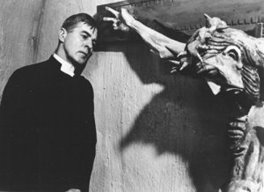
Winter Light (1962) – Written and directed by Ingmar Bergman, starring Gunnar Björnstrand, Max von Sydow and Ingrid Thulin.

My G-d this is a bleak film. Powerful. Important, perhaps. With tremendous acting from all three principals. And interesting and excellent direction from Bergman. But incredibly bleak. Even Sven Nykvist’s cinematography, which can be so beautiful and poetic, cuts sharp, harsh and without mercy. There’s not a single frame of this film that offers any comfort. There's no way out, which is what I think Bergman was getting at. People often discuss his existentialism or atheism, but it struck me after watching this that there's actually something Buddhistic in his outlook. But, oh man, it's tough going. We really enjoyed the first part of Bergman’s Silence Trilogy, Through a Glass Darkly, (see previous Recent Screenings) and were looking forward to this one. In the end, I don’t think Winter Light is as complete a film as the previous one. And it’s certainly not as enjoyable. But it has lingered with me for two weeks, and I respect that. And Bergman is one of the very few directors who truly and deeply probes the tougher spiritual questions. Oh man, if you want to spend a dreary winter afternoon with a Lutheran priest in a dead parish as he loses faith in the Almighty, offers no help to a suicidal parishioner and treats cruelly the one person who loves him, then this is the film for you. Thank G-d Bergman keeps it to 80 minutes. Another half-hour of this and I’d have been listening to Leonard Cohen’s “Dress Rehearsal Rag” and fingering my safety razor. RECOMMENDED (But Not for Everyone). 8/10


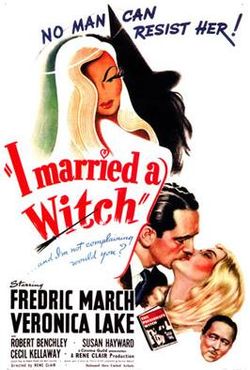
I Married a Witch (1942) – Directed by René Clair, starring Veronica Lake and Fredric March.

Brooklyn girl Veronica Lake was on quite a roll in 1942, starring in the great Sullivan’s Travels, two excellent film noir efforts with Alan Ladd - This Gun for Hire (based on a novel by Graham Greene) and The Glass Key (based on a novel by Dashiel Hammett) - and this delightful supernatural comedy about a witch who entangles herself in the life of a Gubernatorial candidate, played by Fredric March. As good an actor as March was, and he was very good and deserves to be remembered more than he is, Veronica steals the show. She somehow manages to be mischievous, innocent, hilarious and sexy all at the same time. Directed by the great French director René Clair (The Italian Straw Hat, Le Millon) during his sojourn in Hollywood, the film moves along at a quick clip and has several wonderful comic moments. (It would later serve as the basis for the television show Bewitched.) Unfortunately for Lake, her life wasn’t exactly a laughing matter. After a meteoric rise to the top, when she was courted by Howard Hughes and Aristotle Onassis, her career plummeted almost as quickly. A reporter discovered her again in the 1960s working as a barmaid in a New York hotel. But her films in the early 1940s remain a testament to a very special and beautiful talent. RECOMMENDED. 7-8/10.


Syriana (2005) – Written and directed by Stephen Gaghan, starring George Clooney, Matt Damon, Jeffrey Wright, Chris Cooper, Amanda Peet, Christopher Plummer.

In scope and style, this reminded me of Steven Soderberg’s Traffic, and it turns out to have been written by the same guy. It’s a good film in many ways and does an excellent job showing the interconnections (obvious and not so obvious) of global petrol politics. But it’s incredibly hard to follow at times. We stopped the DVD on several occasions, trying to figure out who was who and what exactly was happening. Probably would have worked better as a mini-series, something along the lines of those BBC efforts to tackle John LeCarré’s complex works. As it stands, I came away a bit frustrated, but I also wanted to read the book it was based on. And I want to see the film again at some point, which is a good sign. So, we'll say it's problematic but worthwhile. You won't get many films talking about global politics as well as this on does. Clooney does a fine job, but I’m not sure why he won an Oscar for Best Supporting Actor. Oh, right, because he wasn’t going to get Best Director for Good Night, and Good Luck. RECOMMENDED. 7/10

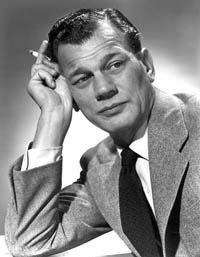
The Farmer's Daughter (1947) – Directed by H.C. Potter, starring Loretta Young, Joseph Cotten, Ethel Barrymore.

What a pleasant surprise. La Reina was a bit down one Friday, so I worked overtime to find something she’d like. I did an advanced search on IMDB for all comedies produced in the U.S. between 1934 and 1950 that had IMDB rankings higher than 6.0. I went carefully through the list – it’s scary how many we’d already seen - and this was one I’d never heard of. But the film earned Loretta Young an Oscar for Best Actress, it had good reviews and, most importantly, it starred Joseph Cotten, who La Reina has always had a bit of a crush on. I thought she would like it, and I think she did, but I may have enjoyed it even more. The lovely Loretta Young (The Bishop’s Wife) plays a Swedish farm girl who leaves home to go to nursing school in “Capital City.” But she immediately runs into trouble and winds up having to take a temporary job as a waitress at a political shindig hosted by a wealthy family whose son, Cotten, is a young, idealistic Congressman. Loretta winds up working for the family and gets more involved in politics until she actually winds up running for office herself. It’s very much a Frank Capra-esque film – sort of Mr. Smith Goes to Washington but with a strong-willed woman and Swedish farmers. It’s sentimental, yes, but it’s also got an intelligently done script that supplies plenty of comedy, some good bi-partisan pokes at corrupt politics (you’re never given the names of the parties), a little action ( a fight scene involving Loretta’s hunky Swedish brothers from the farm), great acting by all invloved, and some nicely developed interpersonal relationships. (Oh, yes, and romance, of course.) The film also features splendid cinematography, including two well-constructed scenes that really knocked me out, the kind of rare gems that make movie-watching so pleasurable. And I'll admit it, I’m a sucker for those 1930s-40s films when the common guy or gal would take on the crooked political system and win. We can laugh now at the naiveté, but there are some strong little speeches tucked away in these films, including one here, and they really show that our political system hasn’t changed much over time, only our attitudes toward it have become increasingly cynical. Anyway, The Farmer’s Daughter isn’t the greatest film ever made, but I think it could be a pleasant surpise for other people besides me. RECOMMENDED. 8/10


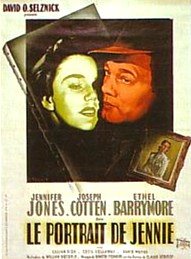
Portrait of Jennie (1948) – Directed by William Dieterle, starring Jennifer Jones, Joseph Cotten and Ethel Barrymore.

If you’re noticing a pattern here, you’re right. I re-kindled La Reina’s crush on Joseph Cotten, so we had to do a little Joseph Cotten film cycle. Cotten’s next film after The Farmer’s Daughter, actually won him an award for Best Actor at the Venice Film Festival in 1948. He was at the peak of his career in the late 1940s. The film after this one turned out to be one of the all-time greats, The Third Man. In Portrait of Jennie, he plays a down-on-his-luck artist who encounters a quirky young girl in Central Park one night. She inspires him to do new and powerful art, so he keeps looking for her in the park. But something strange is going on with the girl. He becomes more and more obsessed with her and the mystery deepens, leading him to paint more intensely and find himself on a journey to track her down that eventually climaxes in a raging sea-storm. Cinematographer Joseph H. August does several interesting things in this film, using a filter to create a canvas-like effect at times; manipulating shadows for a strange, dreamy atmosphere; and actually shooting some of the best realistic shots of New York City that I’ve ever seen in a Hollywood film. The score by Dimitri Tiompkin is based on themes by Debussy and enhances the lyrical melancholy of the film. Some will find it overly sentimental, but I liked the mood it created. A dark and aching romanticism. 7-8/10.

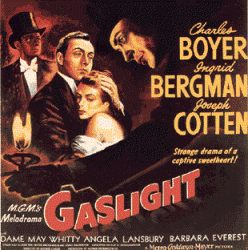
Gaslight (1944) – Directed by George Cukor, starring Ingrid Bergman, Charles Boyer, Joseph Cotten and Angela Lansbury.

Ingrid won an Academy Award for Best Actress for this role, and the film was nominated for seven Oscars altogether, including Best Picture, which it lost to the tepid Going My Way. (The nominee that should have won that year, hands down, was Double Indemnity.) Boyer was nominated for Best Actor (losing to Herr Bing) and Angela Lansbury, in her first role, received a nod for Best Supporting Actress. They all deserved their nominations. Joseph Cotten, the reason we watched this one to begin with, wasn’t nominated for his role, but he also does well. Gaslight is a classic psychological thriller about . . . er . . . a newlywed couple. I’d heard so much about the film, and have certainly used the phrase “to gaslight someone,” though I haven’t actually engaged in the practice, or at least not so that La Reina would notice. Amazingly, the film lived up to my expectations. A great, moody atmosphere, though it’s almost too oppressive at times – just when I was about to beg for mercy, it let up. And I have to say, though he never really gets mentioned as one of the Great American Directors, George Cukor had an incredible career, directing four of my Top 100 Favorite Films: Holiday, Born Yesterday, Adam’s Rib and The Philadelphia Story, not to mention Gone with the Wind (with about 3 other people), A Star is Born, Dinner at Eight, My Fair Lady and several other classics. RECOMMENDED. 8/10


The White Countess
(2005) – Directed by James Ivory, screenplay by Kazuo Ishiguro, starring Ralph Fiennes, Natasha Richardson, and Vanessa and Lynn Redgrave.

Set in Shanghai in 1936, The White Countess has a cool, exotic atmosphere, some very strong acting, and an interesting storyline, but the parts never really come together as a whole and the film plods along without much energy. The script by Ishiguro, author of The Remains of the Day, works well, so I pin the blame on James Ivory’s direction. Fiennes plays a former American diplomat who worked with the League of Nations but has lost everything (including his sight) in the violence of various international conflicts, leaving him fatalistic about politics and life. Richardson is a countess from Russia who now lives in poverty in Shanghai and has to work as a “hostess” in nightclubs and sometimes sleep with the clientele in order to support her once aristocratic family. She and Fiennes are both excellent. (In fact, Fiennes has been excellent in two other films I've seen recently, The Constant Gardener and Harry Potter and the Goblet of Fire.) The Redgrave sisters show up as Natasha's mother and aunt, and, of course, they really are her mother and aunt, except that in this case her mother plays her aunt and her aunt plays her mother. Or something like that. Just to keep you on your toes, I guess. The soundtrack to the film offers an interesting melange of swing jazz with Asian touches, melancholy Russian songs and a beautiful score. The White Countess is worth watching, but it could have been something special. 6-7/10.


Good Night, Constance Ockelman